
Rialto City Directory Collections at a Glance
Rialto historical directory research crosses county, federal, local, and historical collections. The confirmed evidence is specific but not complete: the National Archives identifies San Bernardino issues that include Rialto, and FamilySearch identifies a 1949 volume that includes Rialto and Colton. The San Bernardino issues matter because Rialto appears inside a regional record rather than a separate municipal run. The local Rialto library shelf has not been exposed in an official catalog, so a careful search separates a verified volume from a hoped-for year. The table keeps those distinctions visible while adding the census, map, and society sources that make a Rialto directory entry useful.
| Collection | Years | Where Held | Access |
|---|---|---|---|
| San Bernardino directories including Rialto | 1930 | National Archives city-directories inventory | Confirmed issue; request catalog or research-room access |
| San Bernardino directories including Rialto | 1933-1934 | National Archives city-directories inventory | Confirmed issues; exact page images were not opened |
| San Bernardino Directory Co.'s San Bernardino city directory: including Colton and Rialto | 1949 | FamilySearch catalog 2058594, call no. 979.495 E4s 1949 | Digital or library access may be gated |
| Federal census schedules | 1850-1950; 1890 largely destroyed | NARA Riverside and partner digitization | Online finding aids, research room, or order route |
| Rialto Historical Society | Maps 1892-1929; collection dates vary | 205 N. Riverside Avenue, Rialto | Saturday 10 a.m.-2 p.m.; ask about the genealogical-information library |
| Rialto city and reverse directories | Exact years not verified | Rialto public library and San Bernardino County local-history collections | Ask staff; do not invent shelf years |
The census is a household snapshot, not a substitute for every Rialto directory. Deeds and assessment records help stabilize a Rialto street and parcel, while a directory can place an occupant at a particular period. A map can explain why an old Rialto street name does not match a current address. These sources work best when each citation preserves the year, page, location, and collection keeper.
The National Archives city-directories inventory is the authoritative lead for the confirmed Rialto-inclusive San Bernardino issues.
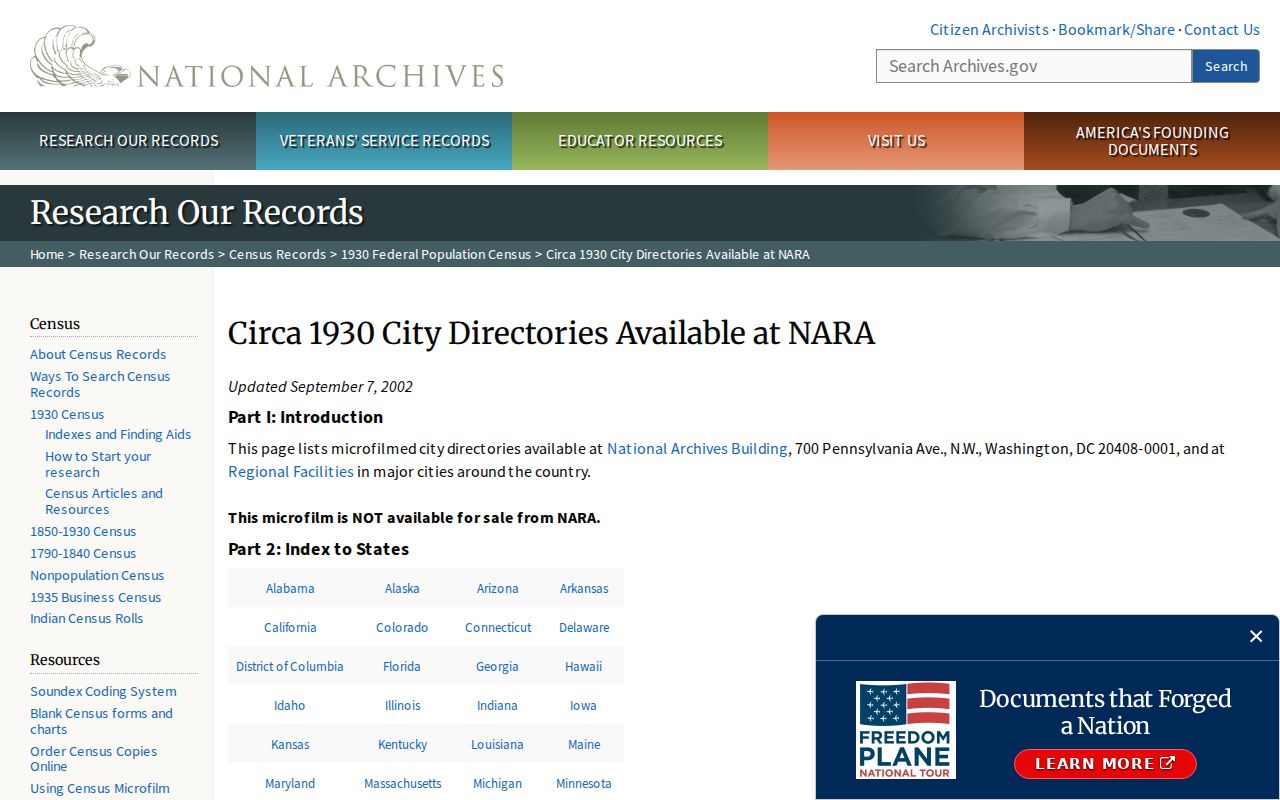
The inventory confirms where to begin, but it does not turn an unverified local shelf into a published run. Ask the holding institution for the issue and page image before quoting an entry.
Rialto's Verified City Directory Years
Three findings anchor the historical directory search. NARA verifies Rialto-inclusive issues for 1930 and 1933-1934. FamilySearch catalog 2058594 verifies the 1949 San Bernardino Directory Co. volume including Colton and Rialto, with call number 979.495 E4s 1949. For a Rialto family, those named issues are firm starting points, not proof that every intervening Rialto year survives. Exact volume and page images remained gated or unavailable during the research pass. That limitation matters: the existence of a catalog record supports a collection claim, not a made-up Rialto household entry.
Rialto's civic timeline also controls how a researcher names a source. San Bernardino County was created in 1853, while Rialto incorporated on October 31, 1911. A county or regional directory can include the Rialto area before incorporation, but it should not be described as a City of Rialto municipal publication. The local record also includes a 1927 newspaper status that can supply names without proving a directory run.
| 1853 | San Bernardino County was created; earlier Rialto-area research belongs to county and territorial or state systems. |
|---|---|
| 1892-1929 | Rialto Historical Society maps trace local growth across this period; the map collection is not a directory shelf. |
| 1911 | Rialto incorporated on October 31, at roughly 1,500 people and 40 businesses. |
| 1927 | The Rialto Record is documented as a newspaper of general circulation from a June 27 court-order date. |
| 1930 | NARA confirms a San Bernardino directory issue that includes Rialto. |
| 1933-1934 | NARA confirms additional Rialto-inclusive San Bernardino directory issues. |
| 1949 | FamilySearch catalog 2058594 identifies the San Bernardino Directory Co. volume including Colton and Rialto. |
| 1950 | Federal census schedules are open through this year under the 72-year rule and can anchor household research. |
No authoritative first or last year for a complete Rialto directory run was located. A gap in the Rialto record is a result, not permission to fill the shelf with a guessed publisher or date.
Read a Rialto City Directory Entry
A period entry should be transcribed before it is interpreted. The 1930, 1933-1934, and 1949 references confirm collection identity, but an official digitized Rialto page was not available for a real quotation. For a Rialto name, the safe method is to photograph or cite the page supplied by the holding institution, then read the publisher's abbreviation key. A name beside a Rialto street address is useful, but it does not by itself prove ownership, kinship, or continuous residence.
| Entry field | What to capture |
|---|---|
| Surname and given name | Copy spelling, initials, compound names, accents, particles, and any former-name notation exactly. |
| Household clue | Record a spouse in parentheses or a widow notation only when the volume prints it. |
| Occupation or business line | Capture the stated work or business and employer when printed; do not expand an unexplained abbreviation. |
| Street address | Write the house number, street spelling, apartment or room mark, and any residence or boarding symbol. |
| Owner or renter mark | Use the publisher's own key. A mark from one run may not mean the same thing in another. |
| Reverse listing | If present, record the street, number, occupant, and business entries rather than assuming the section is complete. |
- Criss-cross directory
- A reverse list arranged by street and number, used to move from an address to an occupant or business.
- Householder index
- A name-centered list of people treated by that volume as household heads or principal residents.
- Abbreviation key
- The publisher's definition list for short forms, symbols, occupations, residence marks, and relationship notes.
- Enumeration district
- The census area assigned to an enumerator; it helps locate a household when an address was recorded by geography rather than modern street form.
Note: Never infer a spouse, tenure, or residence from an unexplained symbol; cite the key and the page before drawing a family-history conclusion.
Rialto City Directories: Alphabetical and Reverse
An alphabetical Rialto volume begins with a surname and can reveal an address, household clue, or business connection. A reverse or criss-cross section begins with the street and number, which makes it better for asking who occupied a known Rialto place during the volume's period. Neither arrangement should be treated as a complete resident roll. Listings can omit people, use initials, follow the publisher's own rules, or reflect a Rialto business rather than a household.
Because the exact Rialto shelf run is unverified, the practical fallback is a direct collection question. Ask the Rialto public library or a San Bernardino County local-history desk whether it holds local directories, reverse telephone books, Rialto Record microfilm, school yearbooks, obituary clipping files, or in-library genealogy databases. Request the cataloged Rialto year and publisher, not a general promise that “old directories” exist.
- Ask whether the volume includes Rialto or only San Bernardino and nearby communities.
- Confirm whether the item is an original, microfilm, scan, index, or staff-held clipping file.
- Record the call number, volume year, publisher, and page range supplied by staff.
- Check whether a reader, appointment, library card, or on-site database is required.
- Keep an access gap in the citation rather than replacing it with an invented year.
NARA Riverside for Rialto City Directory Research
The National Archives at Riverside genealogy room serves Southern California and offers federal census schedules, naturalization and federal-court material, military records, passenger-arrival resources, databases, microfilm, staff or volunteer help, and a research room. It is a useful fallback when a Rialto volume gives a name but not enough context. The federal collection can also help distinguish a Rialto family from another person with the same name through age, birthplace, relationship, occupation, and enumeration geography.
Access is layered. Use the National Archives census guidance and partner digitization for a first pass, then ask the Riverside staff about Rialto-related microfilm, catalog records, or an order route. Do not assume that every San Bernardino volume or local Rialto directory is digitized at NARA. The 72-year opening rule currently makes federal population schedules available through 1950, while the 1890 population schedules were largely destroyed nationally. Directories, deeds, maps, newspapers, and voter or tax material become the substitute bridge for that missing census year in Rialto research.
The National Archives at Riverside genealogy collection is described at its official source page.
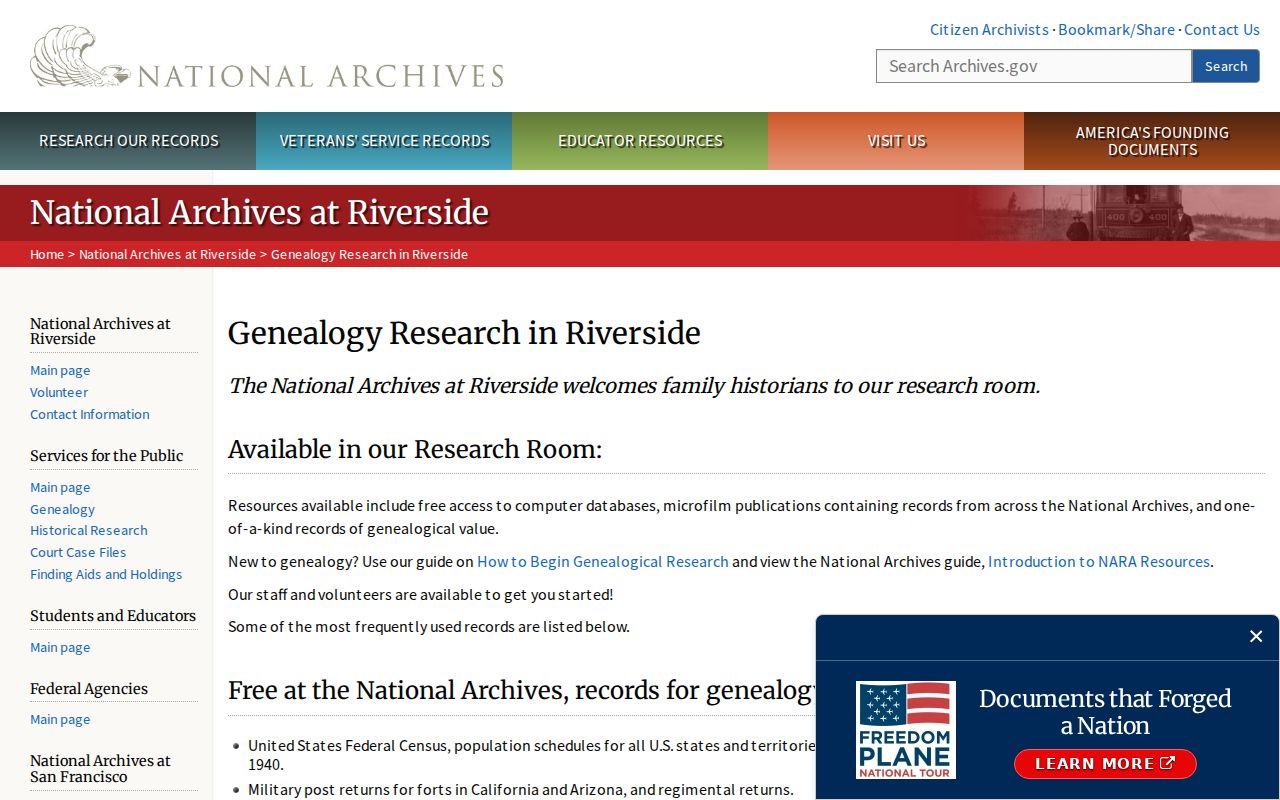
The Riverside research room adds human help and federal context, but it does not erase the need to verify a local directory publisher, volume, and page.
Rialto City Directory Maps and Memory
The Rialto Historical Society is a local fallback when a Rialto street name, parcel line, or family file does not fit a modern search. Its public description identifies a genealogical-information library, historical documents and artifacts, period displays, an aerial view, and maps tracing Rialto's growth from 1892 through 1929. The museum is listed at 205 N. Riverside Avenue, with Saturday hours of 10 a.m. to 2 p.m. The Society says it was founded in 1971 to collect local records, documents, data, and artifacts.
These Rialto holdings can help bridge an old street name to a later address, or explain why a directory entry sits outside a current boundary. They do not establish a complete list of Rialto residents, and the collection dates vary. Ask for the map title, date, source, and any cross-reference used by the staff. A Rialto map is strongest when paired with a directory page, census enumeration, or deed legal description.
The Society's public page is the source-linked starting point for the local collection.
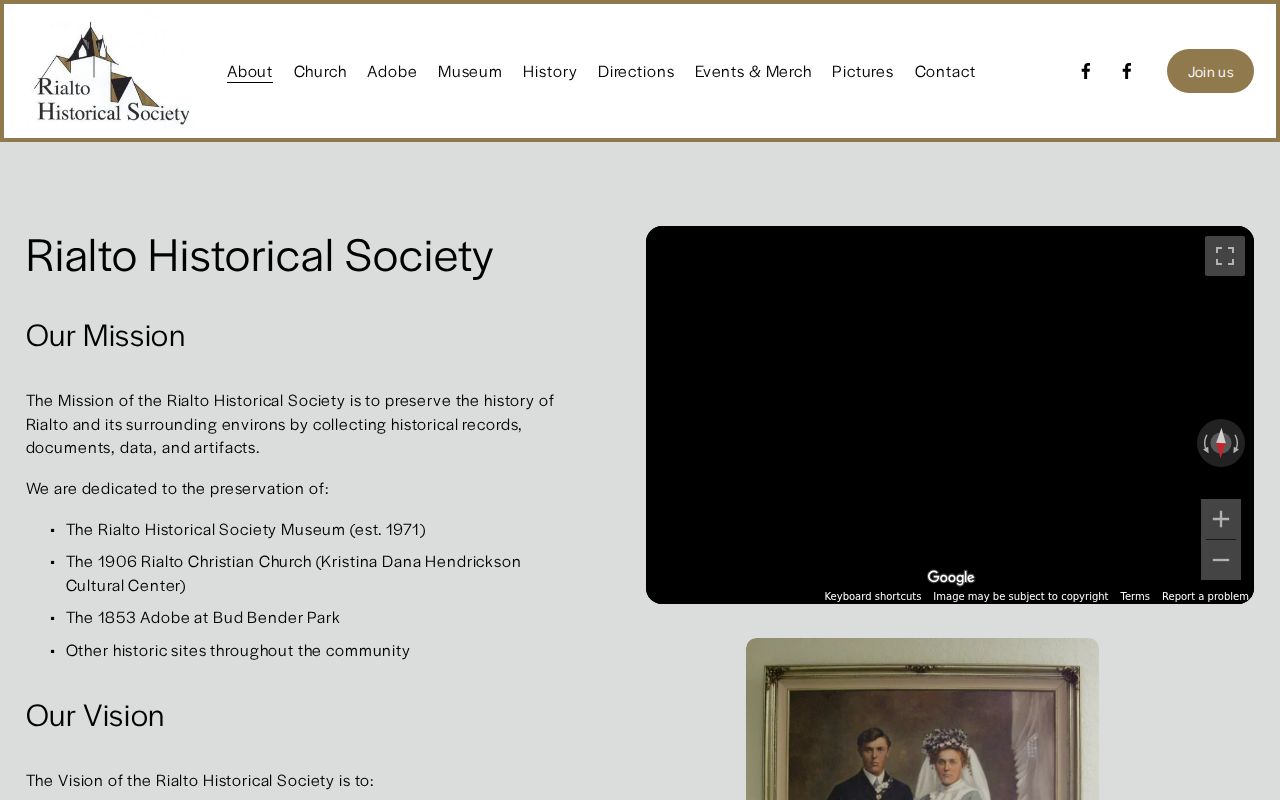
Local historical guidance can explain continuity across the 1892-1929 map period while leaving the actual directory entry to the volume that holds it.
Trace a Rialto City Directory Household
A Rialto directory becomes a household trail when each annual or period entry is treated as a dated observation. Start with a known Rialto person, address, or family event. Preserve the exact spelling and street form, then compare nearby volumes rather than jumping straight to a modern name search. The aim is not to make a smooth story from gaps. It is to show which source places a Rialto household at an address and which source only suggests a move, death, or relationship.
- Choose a confirmed directory year and copy the name, address, symbols, page number, publisher, and access citation.
- Check adjacent years for first appearance, departure, a changed street number, spelling variants, and a replacement occupant in the reverse section.
- Anchor the address to the 1910, 1920, 1930, 1940, or 1950 census, allowing for enumeration districts and the missing 1890 schedules.
- After 1925, use the assessor parcel and APN as a bridge to the county recorder index, while keeping ownership separate from occupancy.
- Use a probate file, obituary, cemetery record, or newspaper notice to test whether a disappearance reflects death, an heir, a move, or an unlisted year.
When a Rialto name vanishes, check the reverse list, a neighboring address, the next census, and the legal description before deciding that the household left. Street renaming and renumbering can break a direct search. A Rialto subdivision map or Historical Society map may explain the mismatch, but only a source with a date and keeper should be used as the bridge.
The Rialto resident lookup can help when the directory trail needs a separate modern identity check, while the historical directory evidence should remain tied to its own volume and page.
The National Archives census collection provides the federal context for the household snapshots used in this sequence.
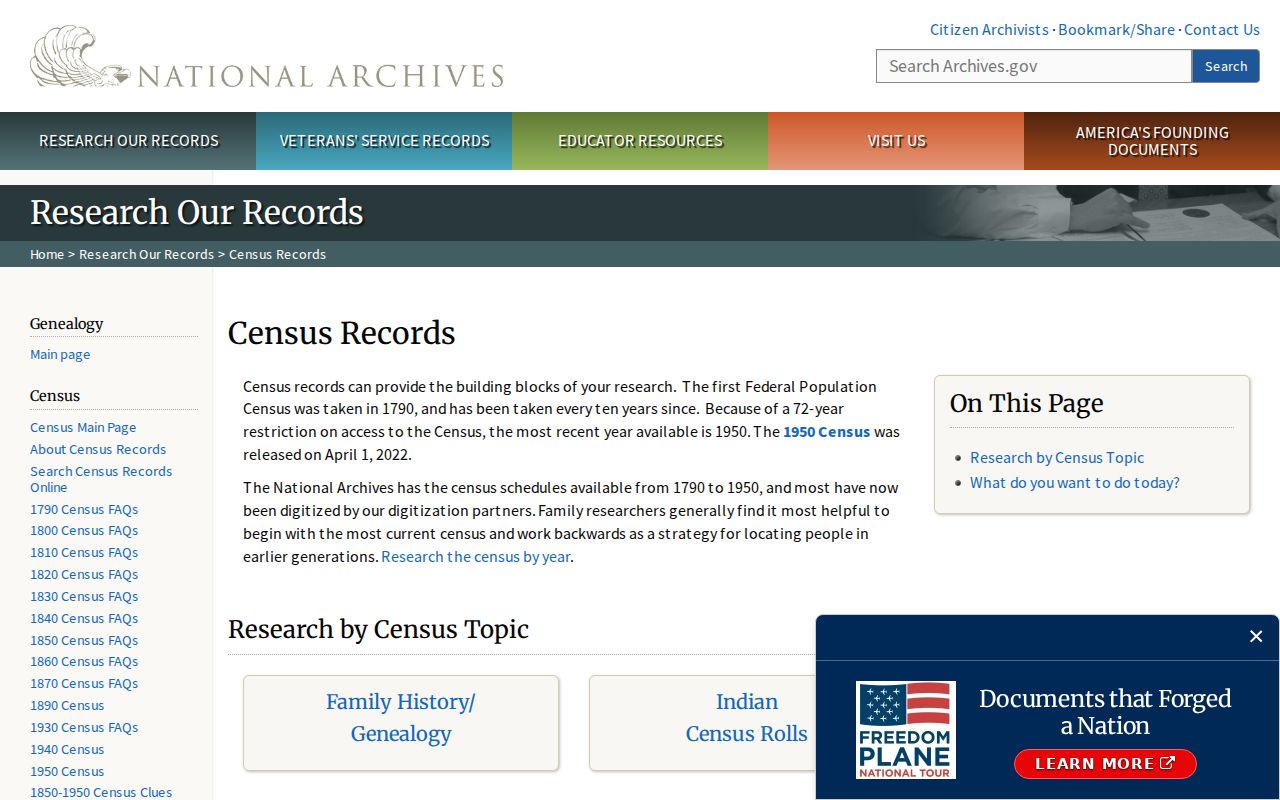
Census access supplies a second dated view of a household; it does not turn a directory listing into proof of title or a complete family tree.
Rialto Record Notices as Clues
The Rialto Record is a useful local lead because the San Bernardino Superior Court's official newspapers-of-general-circulation history records a June 27, 1927 court-order date and circulation in Rialto and Bloomington. Its Rialto archive run was not verified. A Rialto notice may name an estate representative, a probate matter, a marriage, a move, a name change, a fictitious business, or a trustee sale. It points toward a deeper file; it is not the final proof of a household or property claim.
When a Rialto notice supplies a name or date, take the clue to the appropriate custodian. A case lead belongs in the San Bernardino Superior Court Court Access Portal when the record is in CAP. A recorded land or fictitious-business lead belongs with the San Bernardino County Assessor-Recorder-Clerk, whose official records index is separate from court files. Probate and obituary language can identify Rialto heirs or family ties, but the file, certificate, or deed should carry the conclusion.
Note: The Rialto Record's local status makes it a strong name lead, but its unverified archive span should stay visible in every citation.
Rialto City Directory Gaps and Next Stops
Several useful sources remain deliberately open questions. No official Rialto library page exposed an exact city-directory shelf run, a digitized Rialto directory, or a house-history guide. Exact local runs for Rialto reverse directories are therefore unverified. The same caution applies to Sanborn fire-insurance maps: the Library of Congress Sanborn collection is a valid geographic browse point, but the exact Rialto sheets and years were not verified in the official catalog checked.
Sanborn maps can show Rialto building footprints, construction material, street names, street numbers, and neighborhood growth. They can help explain a Rialto address change, but they cannot replace a directory page, deed, or census entry. Ask the Rialto library or archive whether a local scan, microfilm reel, or map index exists, and record the exact year they confirm.
When a Rialto shelf or scan is unavailable, use a simple fallback chain: ask library staff for the cataloged item, ask the Rialto Historical Society about maps and family files, ask NARA Riverside about federal census and regional holdings, and use the county or court custodian for Rialto deeds, probate, and official copies. An access gap is more useful than a confident but unsupported date.
Research standard. A Rialto directory claim is ready to use when the volume, year, publisher, holding institution, and page or catalog citation are recorded. Until then, label it as a lead.