
Rialto Resident Lookup Coverage
A one-person resident lookup in Rialto is a chain of records, not a single public roster. The San Bernardino County Assessor-Recorder-Clerk, Superior Court, elections office, California Department of Public Health, city clerk, Secretary of State, and professional boards each answer a different question. An assessor record can connect a name to a parcel, but it does not prove occupancy. A court result can show a party and case event, but it is not a statewide history. Start with the layer that matches the known fact, then use a second custodian to test identity and time.
| Record | What It Confirms | Where | Access |
|---|---|---|---|
| Assessor parcel | Parcel association, situs, and public mailing or owner fields | ARC govPIMS / Parcel Access | Free map and public details; protected fields may be omitted |
| Recorded instrument | Grantor, grantee, document type, date, and transfer trail | ARC Official Records | Index online from 1925; images by counter visit or copy order |
| Voter information | Authenticated registration status, districts, and ballot information | My Elections Gateway | Self-lookup after authentication; public-file use is restricted |
| Court case | Party name, case type, events, status, and docket trail | San Bernardino CAP | Public case information; name-search products may require credits |
| Vital record | Birth, death, marriage, dissolution, and family links | CDPH Vital Records or county ARC | Indexes and copies have different eligibility rules |
| Probate file | Decedent, petitioner, executor, heirs, and filed addresses when public | Superior Court CAP or the filing district clerk | Case access varies; attachments and protected material may be withheld |
| Business or FBN | Entity, agent, registrant, business address, and filing history | California bizfile Online and county clerk | Index is free; business association is not residence proof |
| Professional license | License status, number, type, and published discipline or address | California DCA Search | Free; detail depends on the board |
When an address is known, the parcel and recorded-instrument layers usually make the clearest start. When only a name is known, use spelling variants and a date range before trusting a court, business, or license hit. A vital record can confirm a family event, while probate can connect a deceased owner to heirs. Each result needs an “as of” date because a record can describe an earlier event rather than a current Rialto connection.
Rialto CAP Fields for Resident Lookup
The Superior Court of California, County of San Bernardino, routes public case information through the Court Access Portal, or CAP. Its modes include case information, calendar search, and related payment and instruction pages. A resident lookup should use the party search as a lead and then read the case number, filing district, party role, and dates before deciding that a result belongs to the person sought. Name-search features can require credits, while exact case-number information is available through the public portal.
The CAP interface documents the search controls below. Accept the terms first. A name search should be narrowed with case category and filing dates when the name is common. A calendar search finds scheduled proceedings, not every case tied to a resident.
| CAP field or control | How it is used |
|---|---|
| Case Number | Exact court identifier for a direct case search |
| Party or Business Name | Name search for a person or organization, subject to product access |
| Case Type or Category | Civil, criminal, family, probate, small claims, or traffic mode as offered |
| Filing or Date Range | Limits results and helps separate people with the same name |
| Calendar | Searches scheduled proceedings rather than a resident directory |
| Accept, Search, Reset | Terms acceptance and form controls used to submit or clear a query |
The CAP result screen can show a case number, case title or party names, case category, filing date, status, court location, events, hearings, and register-of-actions entries. Counsel may appear on a detail page. The court's CAP search instructions illustrate the current controls. Document images vary by case type, authorization, and purchase rules. Sealed cases, juvenile matters, confidential adoption records, and protected family or criminal material may be absent or redacted.
The San Bernardino Superior Court provides the court source represented in the image below. The interface is useful for locating a docket, while the filing district clerk remains the place to ask about a case file or copy.
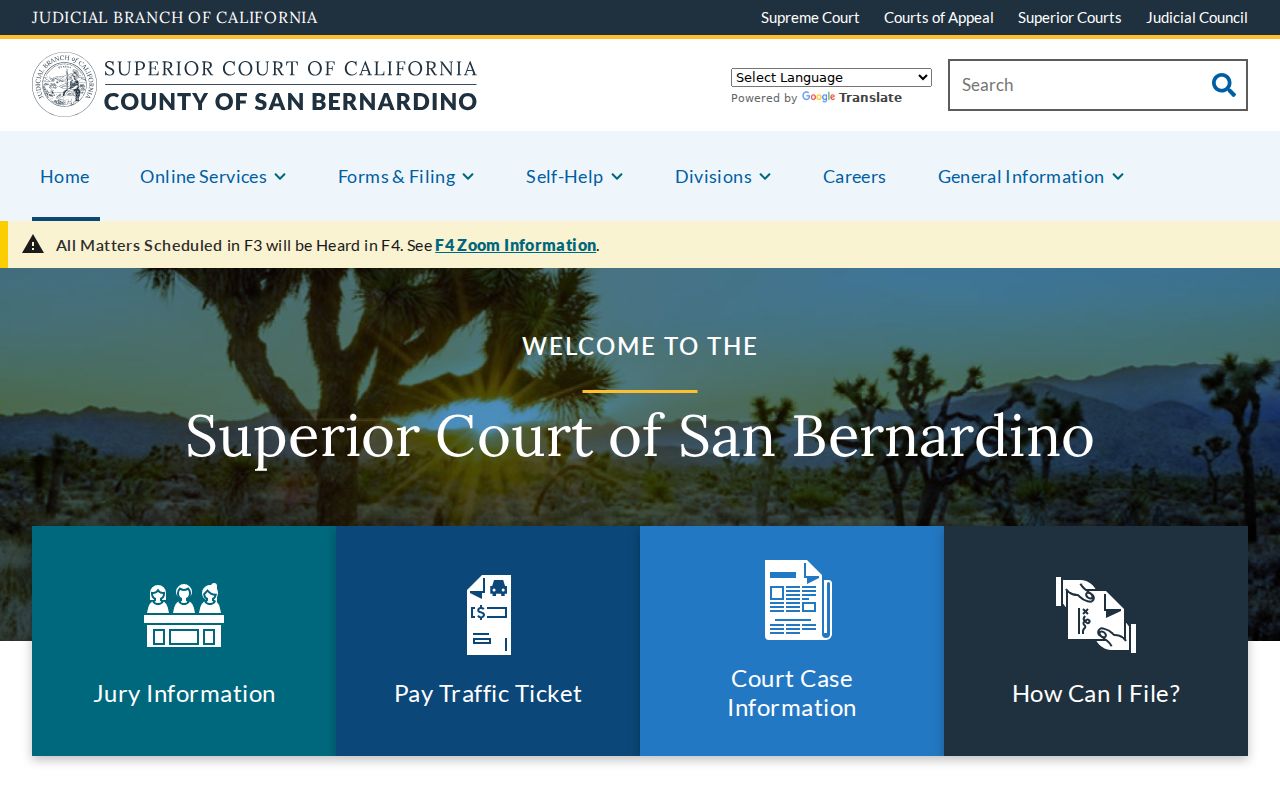
The court image reinforces the distinction between a public case search and a complete file. A result is a pointer to the court record, not a conclusion about conduct, identity, or present residence.
Sample docket inventory. A typical public CAP result may include:
- Case number and case title or party names.
- Case category, filing date, status, and court location.
- Parties, counsel, events, hearings, and register-of-actions entries.
- Document or image availability rules that vary by case type.
CAP has limited data for cases filed before 1998, a boundary also noted in the court's older case-information notice. Older-case questions go to the appropriate district clerk, not to the court’s administrative-records request channel. Administrative records follow California Rule of Court 10.500, while case files follow the clerk’s case-copy process. This split prevents a pre-1998 gap from being mistaken for proof that no case exists.
Verify One Rialto Resident
Verification is strongest when the first name hit is anchored to a place or event, then checked against an independent record. The goal is not to collect every mention of a name. The goal is to show why the selected record belongs to one person and which fact is actually confirmed.
- Write down the full name, initials, former surnames, spelling variants, known date range, and any lawful address or business clue.
- Use ARC Parcel Access for a parcel association when an address is known, preserving the APN, situs, mailing field, and roll date.
- Search CAP with the name variants, case category, and date range, then compare filing district, party role, case number, and events.
- Check a vital index, probate file, business filing, or license record for a separate date or family link.
- Order a certified copy only from the custodian when the source record, eligibility, and purpose call for one.
- Docket
- A court’s running record of a case, including filings, events, hearings, and status entries.
- Index versus image
- An index is a finding aid with labels and names. An image is the underlying filed or recorded document, often available only through a counter, order, or fee.
- Certified copy
- A custodian-attested copy issued under that office’s rules. It has a different purpose from an informational copy or an index entry.
The two-anchor rule matters most when the name is shared. A name plus an APN and matching deed party is stronger than a name alone. A case number plus filing district and date is stronger than a similar caption. Keep the source URL, retrieval date, and exact field wording with each result.
Rialto Resident Lookup: Two-Anchor Control
San Bernardino County records can use compound surnames, maternal and paternal surname order, particles, hyphens, accents, initials, trusts, and business entities. Search every reasonable spelling form, but do not merge results merely because the names look alike. The county recorder advises spelling-variation searches, and recent property indexes may show a trust or entity instead of an individual.
Use two independent anchors before calling a result a match. One useful pair is an APN or legal description plus the same party on an ARC recorded instrument. Another is a CAP case number, filing district, and date plus a separate business or license address. A mailing address can suggest a contact route for tax notices, while a situs address identifies the parcel. Neither one, by itself, proves that a person lives there or holds legal title. When the question shifts from one person to every address along a road, use the Rialto street directory for the separate address-first method.
Dates keep the control honest. Record when the assessor roll, court docket, license, or business filing was viewed. Compare the event date to the retrieval date, and mark a former address as historical. If the source custodian corrects an error, retain the correction trail instead of asking a downstream index to decide which record is right.
Note: A public association with an APN, license, or business filing is evidence of a record relationship, not proof of current residence.
Rialto Resident Records: Vital Copies in 2026
California vital-record access turns on the type of copy and the requester’s eligibility, not on a simple rule that every record becomes open after a fixed number of years. San Bernardino County ARC issues local birth, death, and marriage certificates, while CDPH-Vital Records maintains statewide birth, death, fetal-death or stillbirth, marriage, and divorce records. Historical indexes can be useful finding aids, but an index is not a certified certificate.
| Record | CDPH 2026 fee | San Bernardino ARC 2026 fee | Access point |
|---|---|---|---|
| Birth | $31 | $34 | Use the county for a San Bernardino County event or CDPH for statewide coverage |
| Death | $26 | $26 | County or state application, with copy type controlling use |
| Marriage | $19 | $19 | ARC handles licenses purchased in the county; confidential marriage remains restricted |
| Dissolution certificate | $18 | Not a county ARC certificate route | Superior Court holds the case file; CDPH supplies a certificate of record for covered years |
An authorized certified copy is limited to enumerated eligible people, requires the statutory sworn statement, and generally requires notarization for a mailed application. Most other requesters may buy a certified informational copy marked “Informational, Not a Valid Document to Establish Identity.” A death informational copy includes cause information but redacts signatures and Social Security numbers. A confidential marriage certificate is limited to the parties or a court order.
CDPH applications ask for the applicant, registrant or decedent, event date and place, parent or spouse names where applicable, relationship, purpose, copy type, signature, and payment. CDPH takes check or money order by mail and keeps the fee when no record is found. County ARC states that mail processing is three to four weeks; county birth, death, and marriage routes can therefore differ from the statewide route in price, coverage, and timing.
Note: The 2026 statewide fees are birth $31, death $26, marriage $19, and dissolution $18; verify county charges before mailing.
Rialto Resident Lookup Through Elections Gateway
My Elections Gateway is an authenticated self-lookup, not a public name or street roll. After the voter signs in, the county says it can return registration status and locations, districts, a voter information guide or sample ballot, polling place, mail-ballot drop-off map and status, provisional status, election information, elected officials, and campaign-finance links. Voting history is currently unavailable online, with the county directing voters to call 909-387-8300.
California Elections Code sections 2188 and 2194 limit voter-file access to approved election, scholarly, journalistic, political, or governmental purposes. Commercial use is prohibited. A statewide voter-file request requires a permitted-purpose certification, and the published state route lists $30 for a specific record with a $100 maximum. A county information request uses a wet signature, government identification, intended-use narrative, and security plan. Even an approved file cannot become a public neighborhood directory. Signatures, driver-license or Social Security digits, confidential-voter details, and protected addresses remain withheld.
The Registrar of Voters address is 777 E. Rialto Avenue in San Bernardino, not a City of Rialto office. That street-name trap is a practical reason to parse the full city and ZIP in any result rather than relying on a familiar street name.
Rialto Resident Lookup: Probate and Heirs
Probate is one of the most useful lawful human-use paths when a deceased owner, heir, or estate representative must be identified. CAP may expose a party, case type, filing date, court location, events, and status. The filing district clerk controls copies and older attachments. A petition or inventory can name a decedent, petitioner, executor, or heir, but filed addresses and attachments can be redacted or unavailable. A docket lead should be read with the related deed, obituary, or recorder entry before a family connection is treated as settled.
The Rialto Historical Society maintains a genealogical-information library and maps tracing local growth from 1892 through 1929. The Rialto Record has documented general-circulation status from a 1927 court order. Its legal notices can lead to an estate, name-change, fictitious-name, trustee-sale, or probate file, but the notice is only a pointer. For older family work, the historical volumes and archive trail on the Rialto directory book page can supply an address or household clue that modern records do not.
Keep the roles separate. A named heir in probate is not automatically the current owner. A deed party is not automatically an occupant. A newspaper notice is not a certified court record. The record trail becomes persuasive when the case, deed, date, and legal description agree.
Rialto Resident Lookup: Business and License Layers
Business and professional records can separate two people with the same name without turning a business address into a home address. California Secretary of State bizfile Online can show entity number, type, status, jurisdiction, formation information, principal or mailing addresses, agent, and filing history where published. A county fictitious-business-name record answers a different question about a DBA and registrant. A city business license is another local layer, and personal or tax material may be withheld.
The California Department of Consumer Affairs license search spans many boards and can return a license number, type, status, issue or expiration dates, public address, and links to discipline detail when a board publishes them. The Medical Board, Board of Registered Nursing, Contractors State License Board, Department of Real Estate, State Bar, and other boards keep their own detail pages. Match the license number and dates before attaching a professional record to a Rialto resident.
These records are identity anchors, not residence records. An agent, principal, responsible party, licensee, or business registrant may work in Rialto, use a mailing address, or represent an entity without living at that address. Use the layer to confirm a name form, occupation-era, or date, then return to the custodian that holds the fact in question.
Note: Entity, fictitious-name, city-license, and professional-board records answer different questions and should not be merged into one resident profile.
Rialto Resident Records: California DOJ Review
The California DOJ Record Review process is a fingerprint-based, self-only route. A person asks the Department of Justice to review that person’s own California record, pays a $25 DOJ fee plus the Live Scan rolling charge, and may qualify for a waiver. It is not a public, name-based resident lookup and cannot be used to request another person’s criminal-history record.
The official California DOJ source appears in the image below. The result is subject to the state’s identity, fingerprint, and access process, so a public court docket should not be substituted for a private self-review, and a CAP name hit should not be described as a DOJ record.
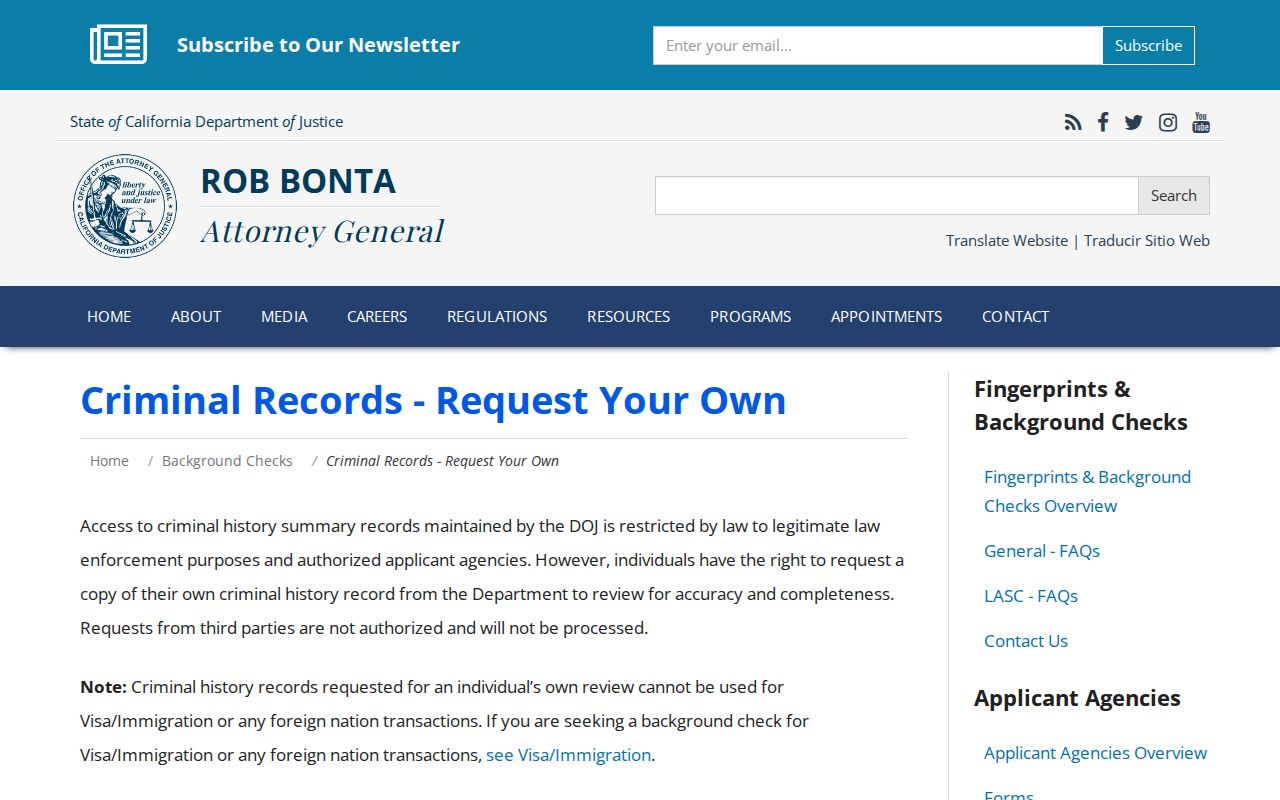
The image points to a self-check pathway with a defined requester. That boundary protects the difference between public case information and a state-held identity record.
Federal PACER in a Rialto Resident Lookup
State court coverage does not include federal cases. For a federal civil or criminal case tied to a Rialto name, start at PACER and use the Central District of California or the federal Case Locator. PACER requires an account and uses the judiciary’s current fee schedule. The research notes a general $0.10-per-page charge with a $3 cap per document and a quarterly waiver when total charges are $30 or less, subject to the current schedule. District court and bankruptcy repositories are separate.
The federal access route is shown below. Compare a case number, district, filing date, party role, and address or counsel detail when available. A federal caption with a common name is not enough to identify a Rialto resident, and an allegation is not a finding.
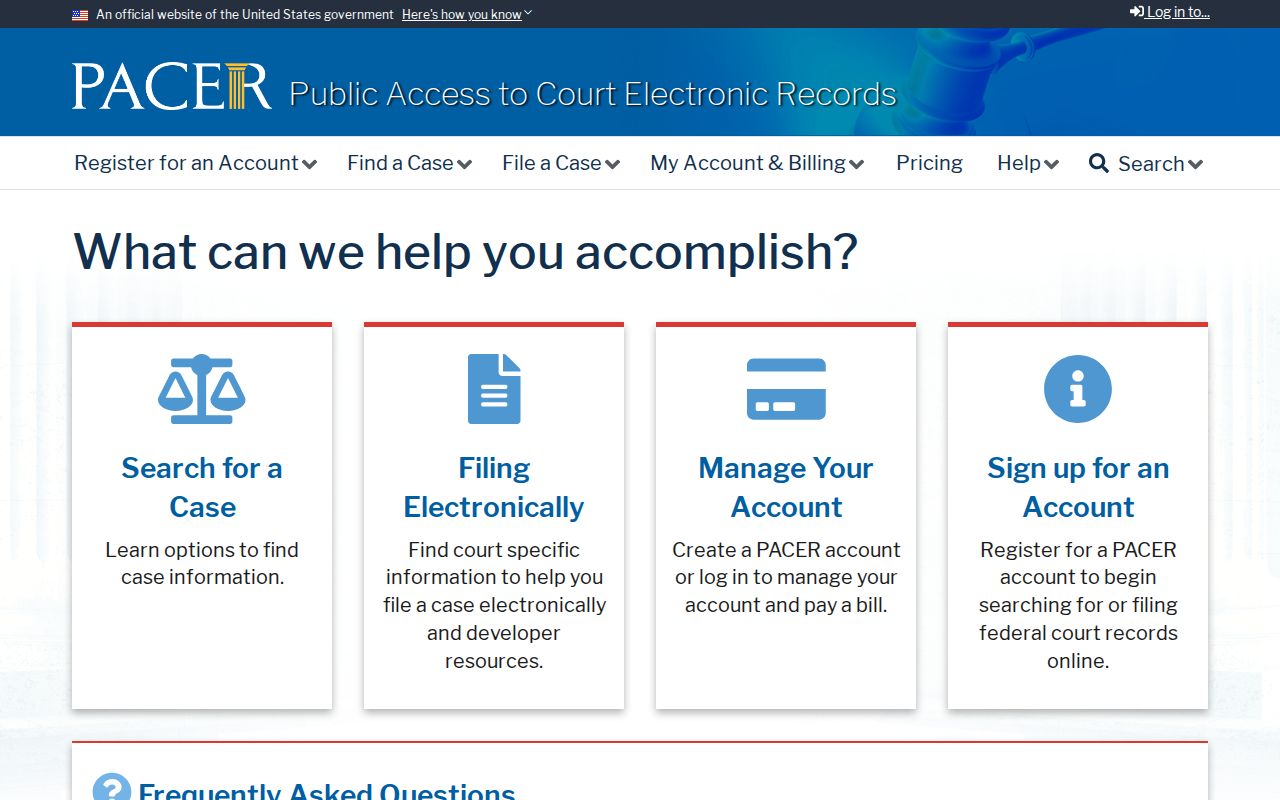
The PACER image illustrates the separate federal channel. Use the source’s case number and district to request more information from the correct federal court rather than sending a state case request to San Bernardino County.
The PACER Case Locator is a separate federal search entry point for locating a case across participating courts. Its official interface is shown below. A locator result still needs district, case number, date, and party-role checks before it is tied to one person.
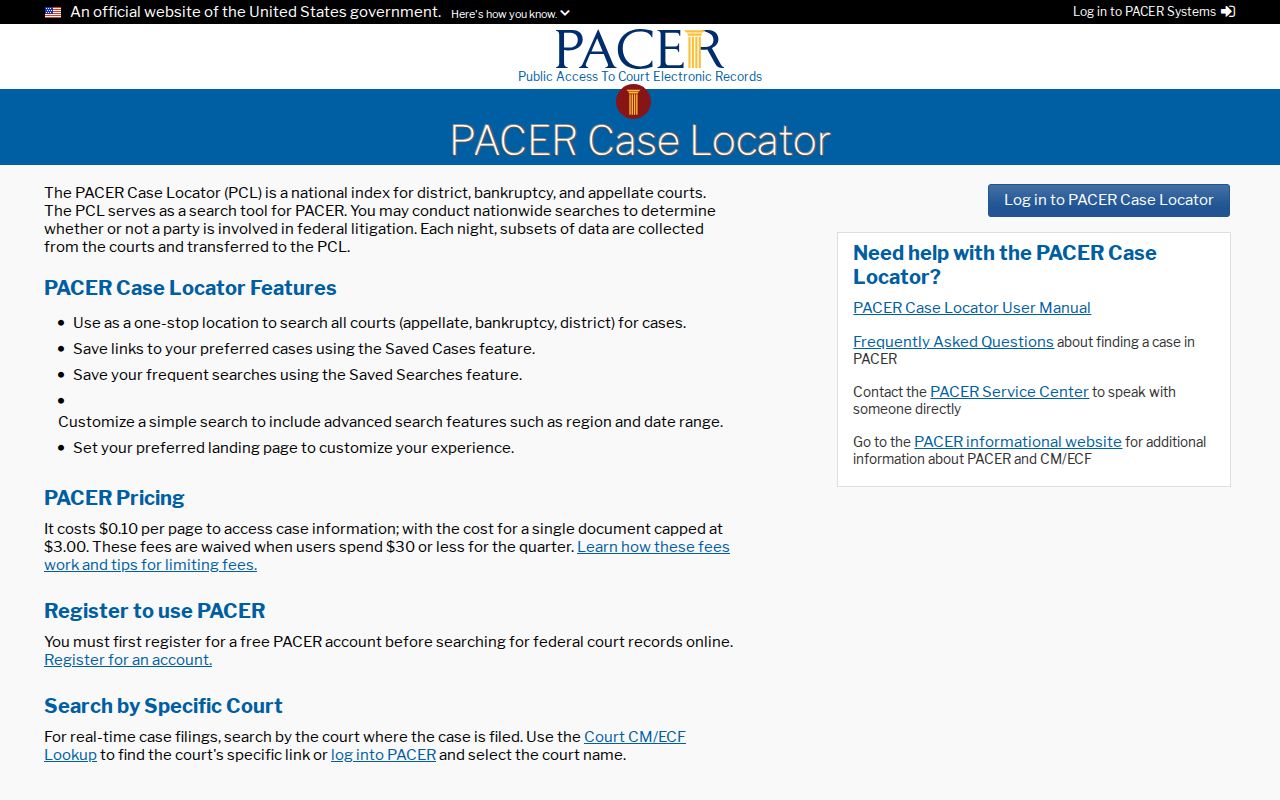
The Case Locator image supports the federal fallback without turning a national case index into a resident directory. Retrieve the file from the court that holds it and preserve the access date.
Rialto CPRA Requests for Missing Records
When no public search answers a focused question, the Rialto City Clerk is the municipal fallback under the California Public Records Act, Government Code sections 7920.000 and following. The agency normally determines within ten calendar days whether it has disclosable records, with a possible fourteen-day extension for unusual circumstances. That is a determination deadline, not a promise that production will be complete by that date.
The current Rialto public-records request page lists Management Services and City Clerk at 290 W. Rialto Avenue, Rialto, California 92376, telephone 909-820-2519, Monday through Friday from 7 a.m. to 6 p.m. The city provides a Hyland search and online request route. The written form’s documented example asks for permits for a street address, making an address-based permit request a useful fallback when an unauthenticated portal does not show the record.
A focused request should identify an existing record, date range, street number and name, APN if known, and record type. The form includes requester name, phone, mailing address, delivery choice, signature, and date. Submission channels shown include office delivery or mail and email to cityclerk@rialtoca.gov. The current city page states $0.30 per paper page and no charge for email delivery. Ask for an existing record or export, not a newly compiled directory. Permits, code files, planning records, council minutes, business-license datasets, and historic address references may be held by different city departments.
Rialto Resident Lookup Legal Limits
Some people are intentionally difficult to locate through public records. California’s Safe at Home program under Government Code sections 6205 through 6211 gives eligible participants a substitute mailing address and confidential voter registration. Participants may also use the designated address in certain deeds, changes of ownership, and deeds of trust under section 6209.5. The program does not erase old records, and a protected address may be omitted from assessor or voter data.
Correct a wrong result with the source custodian, such as the assessor, recorder, court, elections office, license board, or city clerk. Do not ask a compiler to decide which person a record belongs to. Public availability never permits impersonation, threats, stalking, or repeated harassment. California Penal Code section 646.9 addresses stalking, sections 422 and 653.2 can apply to threats or electronic harassment, and civil harassment restraining orders are addressed by Code of Civil Procedure section 527.6.
Lawful use. A Rialto resident lookup is for personal, lawful research such as family history, reconnecting, estate work, or source verification. Using records to stalk, harass, intimidate, or harm another person is prohibited.
A careful resident lookup ends with restraint: retain only what is needed, respect confidential and sealed records, and verify an important fact with the office that created it.