
Rialto ZIP Code Directory Coverage
San Bernardino County service materials list 92376 and 92377 for Rialto. Bloomington sits nearby with 92316, which raises an edge question on the south and west rather than a third general Rialto ZIP. The postal label moves mail. It does not decide whether a parcel sits inside the incorporated city. That is why a Rialto ZIP code directory starts with postal coverage and then turns to the county map, where city jurisdiction, APN, and parcel boundaries can each be checked on their own.
| ZIP | Areas Covered | Post Office | Notes |
|---|---|---|---|
| 92376 | Central and southern Rialto postal area | Rialto delivery or post-office facilities; verify the serving station | Common Rialto ZIP; it does not prove city jurisdiction |
| 92377 | Northern Rialto postal area | Rialto delivery or post-office facilities; verify the serving station | Common north-Rialto ZIP; county lists pair it with 92376 |
| 92316 | Bloomington postal area adjacent to Rialto | Bloomington Post Office | Not a general Rialto ZIP; GIS decides an edge parcel’s city |
Confirm the exact station through the USPS locator. Never infer it from a city name. A postal city line can be accepted for delivery. The parcel may still sit outside that city. The reverse happens too: a parcel inside Rialto can carry a neighboring postal identity. Treat ZIP coverage as the first geography layer, not the final jurisdiction answer.
Finding a Rialto Postal Code
Start any ZIP-keyed resident lookup with a full street address. The USPS address lookup returns the standardized mailing line. It also supplies the ZIP+4 extension. Those four extra digits narrow delivery to a route, block, or other postal segment. They name no resident. Nor do they replace the APN or legal description that county records rely on.
- Enter the full standardized address in USPS lookup and save the returned ZIP and ZIP+4 exactly as shown.
- Compare the postal city and ZIP with the San Bernardino County public assessor map, then record the parcel’s APN and situs.
- Use the parcel map to check incorporated-city jurisdiction, neighboring polygons, and any district lines that matter to the record request.
- Inspect only the public parcel fields that are displayed, then use the APN or address as the key for a focused custodian search.
- When the question becomes street-level, continue with the Rialto street directory method instead of treating a ZIP as a resident roster.
No official Rialto search accepts a ZIP and returns every resident. Nothing like that appears in the published materials. The county's public property tools work differently, offering parcel number, situs, name, map book, parcel map, tract map, attached parcel, and property ID modes. The assessor exposes no reliable ZIP-capable filter. State the gap plainly. A ZIP code directory can organize an address set, yet it cannot create a lawful or accurate list of households.
Rialto ZIP Boundaries Versus City Limits
USPS ZIP Codes are delivery constructs. City limits are legal boundaries. In Rialto the postal line, assessor situs, recorded legal description, school district, and special districts can each point to a different layer. Check the full address in the USPS lookup first. Then let county GIS settle the land question. A "Rialto" mailing city outside the incorporated limit still needs whichever county or local agency actually holds jurisdiction. The same GIS check applies when a parcel inside Rialto accepts a different postal city.
- ZIP code
- A postal delivery area used to route mail. It is not a parcel boundary or a resident index.
- ZIP+4
- The base ZIP plus four digits that narrow delivery within that postal area. It improves mail routing, not identity proof.
- PO-box ZIP
- A ZIP used for post-office boxes or a restricted delivery pattern. No Rialto-only PO-box ZIP was verified in the research.
- Unique ZIP
- A ZIP assigned to one organization or facility rather than a broad neighborhood. No unique Rialto ZIP was verified here.
- Carrier route
- An internal delivery route inside a ZIP. It is a postal operations term, not a city or assessor district.
Note: A ZIP match helps standardize an address, but only GIS and the responsible custodian can resolve local jurisdiction.
92316 at Rialto's Postal Edge
92316 is the nearby Bloomington postal area. It is not a general Rialto ZIP. Even so, its proximity invites a "Rialto versus Bloomington" error whenever a street lies near the southern or western edge. A name, city line, and ZIP can all look consistent while pointing to a parcel under another local jurisdiction.
Let USPS settle the deliverable address, never the city-limit decision. Then open the San Bernardino County Assessor property-information hub and its linked Public Assessor Map or Parcel Access. Compare the situs, the APN, the map location, and the legal description. If a record request involves a permit, code file, or municipal action, the GIS result shows whether Rialto or a county office is the better first custodian.
The same check applies to 92376 and 92377. A ZIP code directory narrows a search to the likely delivery area. Adjacent parcel polygons settle the boundary question. Street-number guesses do not.
Lytle Creek and Rialto Postal Geography
Rialto's boundaries shifted in ways that matter. Lytle Creek Neighborhoods 2 and 3 joined the city on July 25, 2016. The city grew from 22.3 to 24.1 square miles. Its sphere of influence fell from 13.3 to 11.5 square miles. USPS delivery often kept the familiar ZIP anyway. A boundary change can reroute a record request to a different city department while the mailing line stays the same.
The city's north-island materials add two exceptions. El Rancho Verde is an approximately 212-acre county island kept out after historic resident opposition. CEMEX stayed under county jurisdiction too. ZIP searches touching those areas need a parcel-level jurisdiction check before anyone picks a permit, planning, or code-record custodian.
Read the city's Lytle Creek annexation material and the north-islands material alongside the current county map. Annexation history explains the limit. A ZIP code alone cannot reconstruct municipal authority for every address.
Three Identities Behind Rialto Addresses
A Rialto address lookup works best when you keep three identities straight. The situs is the assessor's physical location for a parcel. The mailing address is where tax notices and other correspondence go. The legal description is the recorded land identity. It is usually a tract and lot or a metes-and-bounds statement. Each answers a different question. Confusing them is the fastest way to chase the wrong household through a ZIP code directory.
These fields can disagree for an absentee owner, a trust, a manager, or a chosen mailing address. The assessor's public detail may separate Main Situs from Mailing Address. It may also show APN, roll-value history, parcel history, owner history, land or residence characteristics, maps, and reports. Protected names or addresses can be omitted under Government Code section 7928.205. So a public mailing field is a clue to the tax record. It is not proof that a person lives at that address.
Good record discipline keeps a residents directory result honest. When a ZIP code result raises a question of identity, note the postal result, APN, situs, mailing field, legal description, and retrieval date as separate items. That habit stops a familiar city name from standing in for a complete location.
No Verified Rialto ZIP Filter
The govPIMS materials describe parcel-number, address, name, map-book, parcel-map, tract-map, attached-parcel, property-ID, and interactive-map functions. None of them accepts a ZIP. None returns a full set of Rialto parcels or residents. The assessor's public tools are assessment systems. They are not title or occupancy systems, and California law constrains how owners are displayed.
That gap is guidance in itself. Do not assume 92376 or 92377 can be pasted into an assessor search. A ZIP entry will not yield a resident directory. Instead, validate a known address through USPS. Use GIS to select the parcel. Then use the APN to anchor the next official record search. For a batch of addresses, a focused public-records request can ask for an existing export. That works if the custodian already maintains one. The California Public Records Act does not force an agency to act. It need not build a new ZIP-based people list.
Note: The official sources publish no verified Rialto ZIP split or realignment. They offer no ZIP-capable assessor filter or complete ZIP boundary map.
Rialto Voter Data and Postal Limits
A ZIP code alone will not unlock voter data. Knowing an address does not make California voter files a public residents directory. My Elections Gateway authenticates one voter at a time. It returns personalized registration status, districts, polling information, ballot resources, and related election links. There is no public name-only or ZIP-wide search. The state voter-file route demands an approved purpose. That purpose must be election, scholarly, journalistic, political, or governmental. A certification is also required. California Elections Code sections 2188 and 2194 restrict use. Commercial use is prohibited outright.
The California Secretary of State voter-file instructions spell out approved access and fees. The statewide route lists $30 for a specific record with a $100 maximum. County applications carry their own approval, security, and delivery rules. Confidential voters and Safe at Home participants get extra protection. A ZIP code can appear inside an authorized record request. It still grants no permission to publish voter roll details. Names, addresses, signatures, and participation fields all stay protected.
Official Layers After a Rialto Postal Search
USPS and GIS pin down the right geography. Narrower official tools can answer sharper questions. California Megan's Law offers name and map or address-area modes with statutory warnings. The California State Controller's unclaimed-property search takes a last name or business name, with optional first name and city. It can display a reported owner or location, property type, reporting business, and property identifier. Neither is a current-resident roster. A ZIP or city clue helps separate records. The custodian's field remains the source.
The official California Megan's Law search appears in the image below. It is a public registry with purpose limits. Any ZIP-based result must stay inside the site's warning and California law.
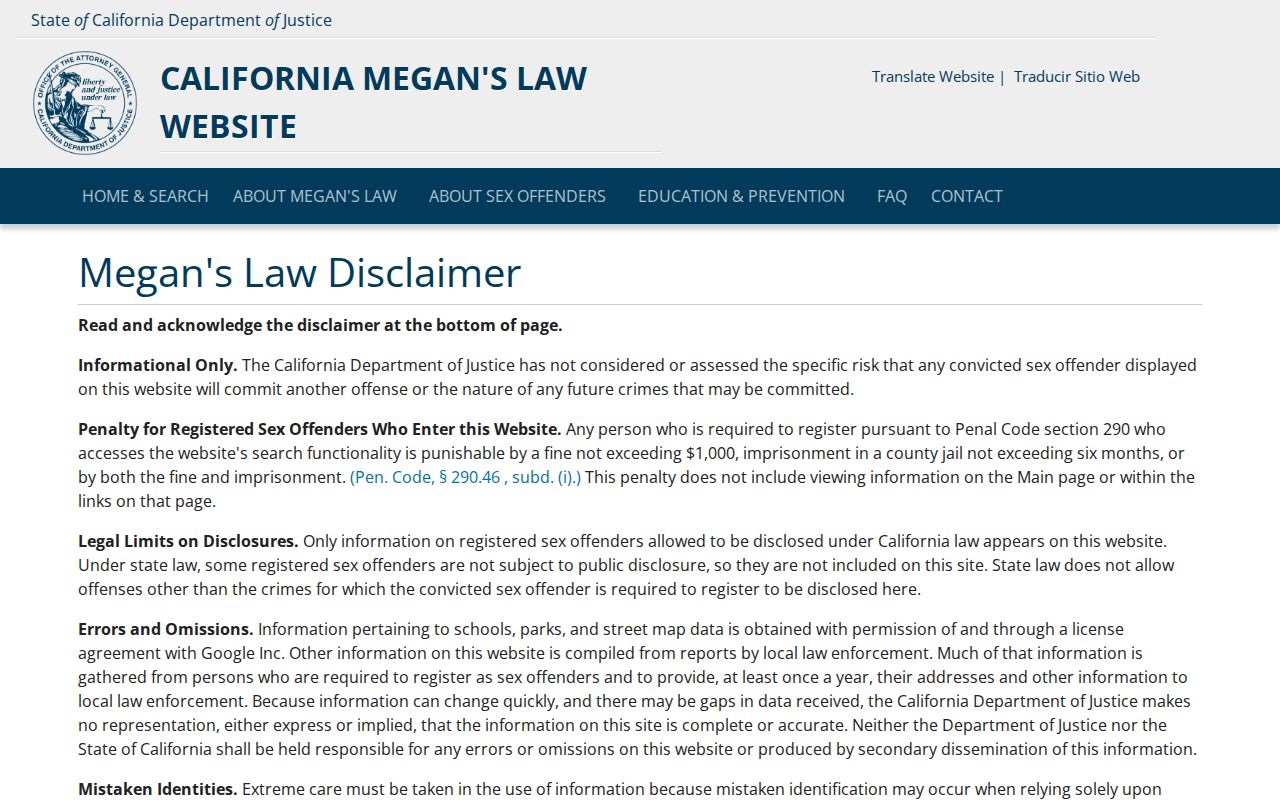
The registry image shows the difference between an official map layer and a postal directory. It publishes only its own fields. It never establishes that every person in a ZIP is listed.
The California State Controller unclaimed-property search is shown next. A claim lead can carry a reported address or city. The claimant must still prove identity and entitlement. The state process handles that.
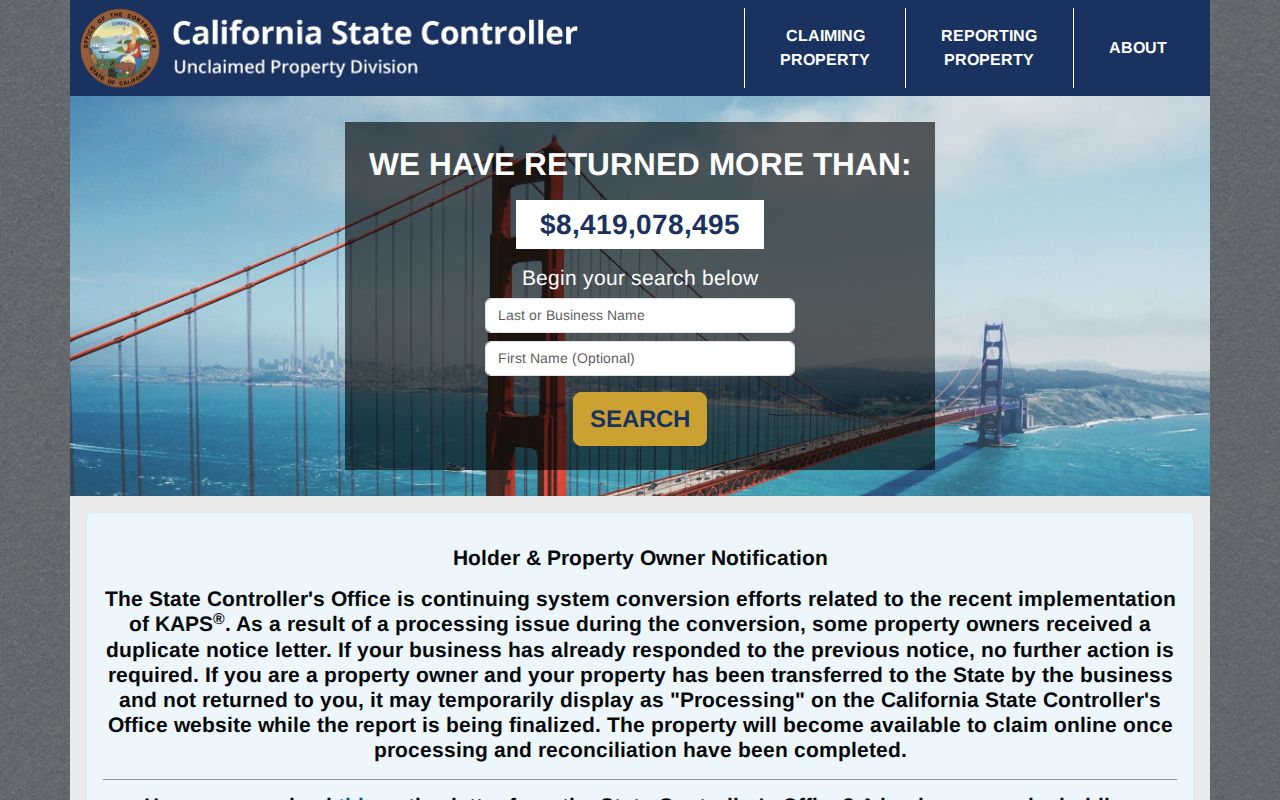
Treat the unclaimed-property image as a reminder. A reported location is not a present home. Official layers support a name check, not a ZIP-based guess about where someone lives.
Rialto Postal Research Gaps
The official sources publish 92376, 92377, and adjacent 92316, yet they offer no complete Rialto ZIP boundary map, no definitive station name for every address, and no confirmed history of a local ZIP split or realignment. The assessor publishes no ZIP-capable filter for parcel searches. Those gaps are reasons to verify a particular address rather than fill in a neighborhood from a guess.
For a reliable record trail, save the USPS result, ZIP+4, postal city, assessor situs, APN, GIS jurisdiction, and legal description. Then pick the custodian that holds the next fact: ARC for recorded instruments, the city clerk for municipal records, the Superior Court for case files, elections staff for approved voter data, or a state registry for a state-held result. A ZIP code directory serves best as a postal geography tool, kept firmly in its lane.
Note: Postal coverage can narrow a search, while parcel geography and custodian rules decide what a Rialto record can actually confirm.