
Rialto Previous Residents Source Map
A single Rialto address does not have one complete history file. For a Rialto house, the county assessor can identify a parcel and provide assessment clues, the recorder can show transfer parties, directories and census schedules can place occupants at a date, and permits or maps can explain changes to the land. Each source has a different start point and access route. The table separates title evidence from household evidence so a past Rialto resident is not mislabeled as an owner.
| Source | Years It Covers | Where Held | What It Shows |
|---|---|---|---|
| ARC recorder index | 1925-present online; earlier material requires counter or archive research | San Bernardino County ARC, online index, Hall of Records, or High Desert Government Center | Grantor, grantee, document date, type, and document number |
| Grantor-grantee decade microfilm | Pre-1958 in the county property-research workflow | Main Recorder office | Older party and legal-description links in the chain |
| Assessor lot and parcel books | 1895-about 1950 | County Historical Archives | Taxpayer or owner, legal description, and separate land, improvement, tree-vine, and water values |
| Assessment-roll history | 1978-present | ARC property-information portal and downloads | Value history, parcel continuity, and ownership clues |
| Federal census | Open through 1950; 1890 population schedules largely destroyed | NARA, partners, and digitized collections | Household members, relationships, ages, occupations, birthplace, and enumeration geography |
| City and reverse directories | Exact Rialto run not officially verified | Local-library or San Bernardino County local-history inquiry | Occupant and address evidence for a printed period |
| Building and code files | Retention and full date span not published; countywide permit requirements about 1936 | Rialto City Clerk CPRA request | Alterations, applicants, inspections, and project chronology |
| Sanborn fire-insurance maps | Exact Rialto sheets and years not verified | Library of Congress collection or local inquiry | Footprints, construction material, street numbers, and neighborhood development |
Start with the source that matches the question. A present-day Rialto parcel question begins with the assessor. A prior owner question begins with the recorder and legal description. A Rialto household question begins with a directory or census. An older parcel question may require the archive before any online search can work. The gaps are part of the result, especially when a local directory run or Sanborn year has not been verified for Rialto.
Note: “Previous residents” is a household-history label; a deed party, taxpayer, directory occupant, and census household member are not interchangeable.
Rialto Address Trail for Previous Residents
The first step is to turn a Rialto street address into a stable parcel identity. Use the San Bernardino County Assessor property-information page and its linked Public Assessor Map or Parcel Access tools. The official portal supports searches by parcel number, situs address, owner or name, map book, parcel map, tract map, attached parcel, and property ID. The older PIMS manual documents those modes, while the current user guide controls where the live interface differs.
For a Rialto address, save the APN, tract or lot reference, legal description, current owner display when law permits, and the distinction between main situs and mailing address. The APN is a map and assessment key. The legal description is the stronger bridge for old Rialto deeds. The owner shown in an assessment system is not proof of legal title, and a tax mailing address is not necessarily where the parcel or a person is located.
The ARC service directory is the source-linked starting point for the county parcel and recorder services used in an address history.
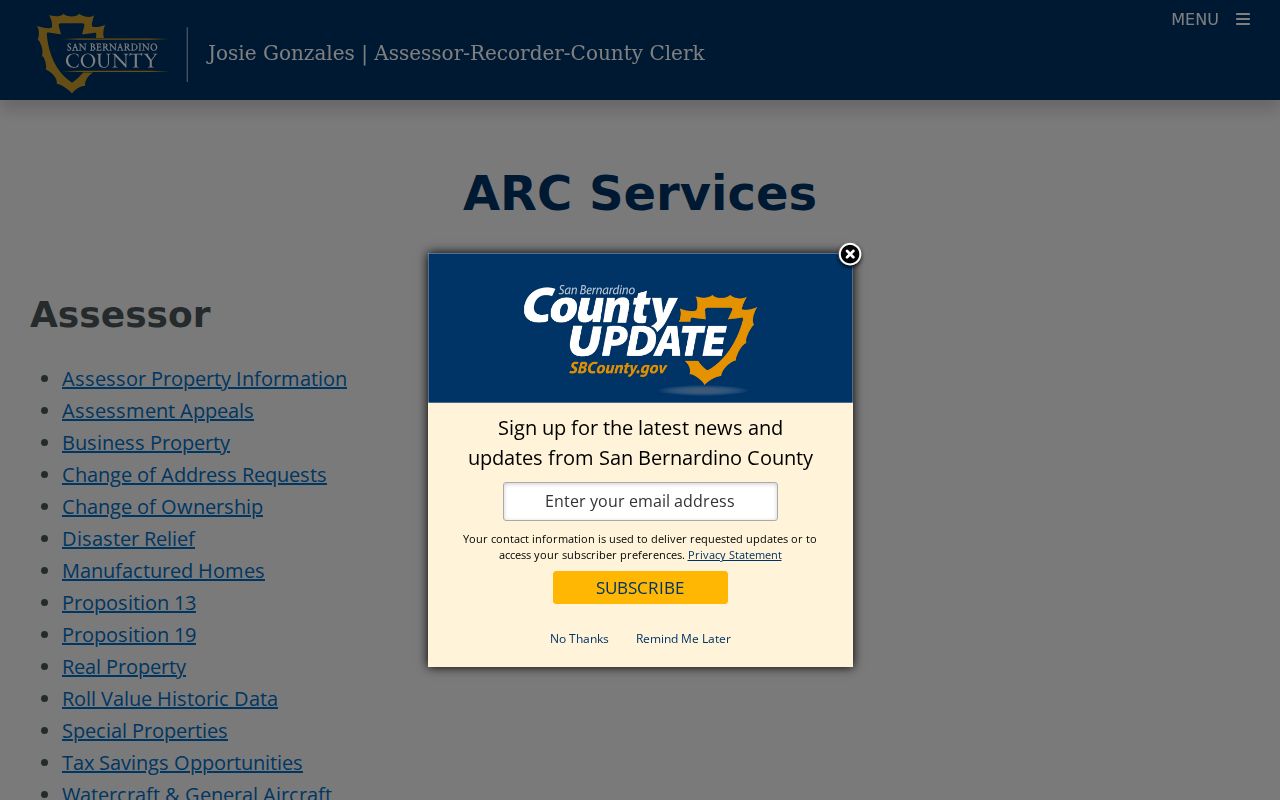
A Rialto parcel screen gives the address trail a fixed point, but the assessment display remains an assessment record. The deed and its legal description are needed for a Rialto title sequence.
Rialto Previous Residents Deed Chain
Once the Rialto parcel is known, follow the transfer trail from the current acquisition backward. The county's recorder index is party based. It does not offer an unrestricted street-address search for recorded land instruments, so the APN, legal description, owner variants, trusts, and entities matter. The chain is strongest when every Rialto step records the document number, recording date, title, parties, and legal description from the index or image.
- Confirm the intended Rialto parcel and save its APN, situs, mailing distinction, tract or lot reference, and legal description.
- Search the current owner as grantee near the assessor transfer date, then record the Rialto acquisition deed's document number, grantor, grantee, date, type, and legal description.
- Search the seller or grantor as an earlier grantee, testing spouse names, trust names, entities, initials, and spelling variants against the same legal description.
- Repeat the party search backward, keeping the Rialto parcel description constant and noting any subdivision, lot, block, or map change.
- When the online or microfilm route stops, ask the counter staff which deed book, map, or decade index continues the Rialto chain.
- Grantor
- The party transferring an interest in the recorded instrument.
- Grantee
- The party receiving an interest in the recorded instrument.
- Chain of title
- The connected sequence of recorded transfers used to trace interests in one parcel through time.
- Legal description
- The tract, lot, block, section, township, range, or other land description that identifies the property for the record, often more reliably than an old street address.
The ARC recorder self-service disclaimer explains the catalog search and spelling-variation advice.
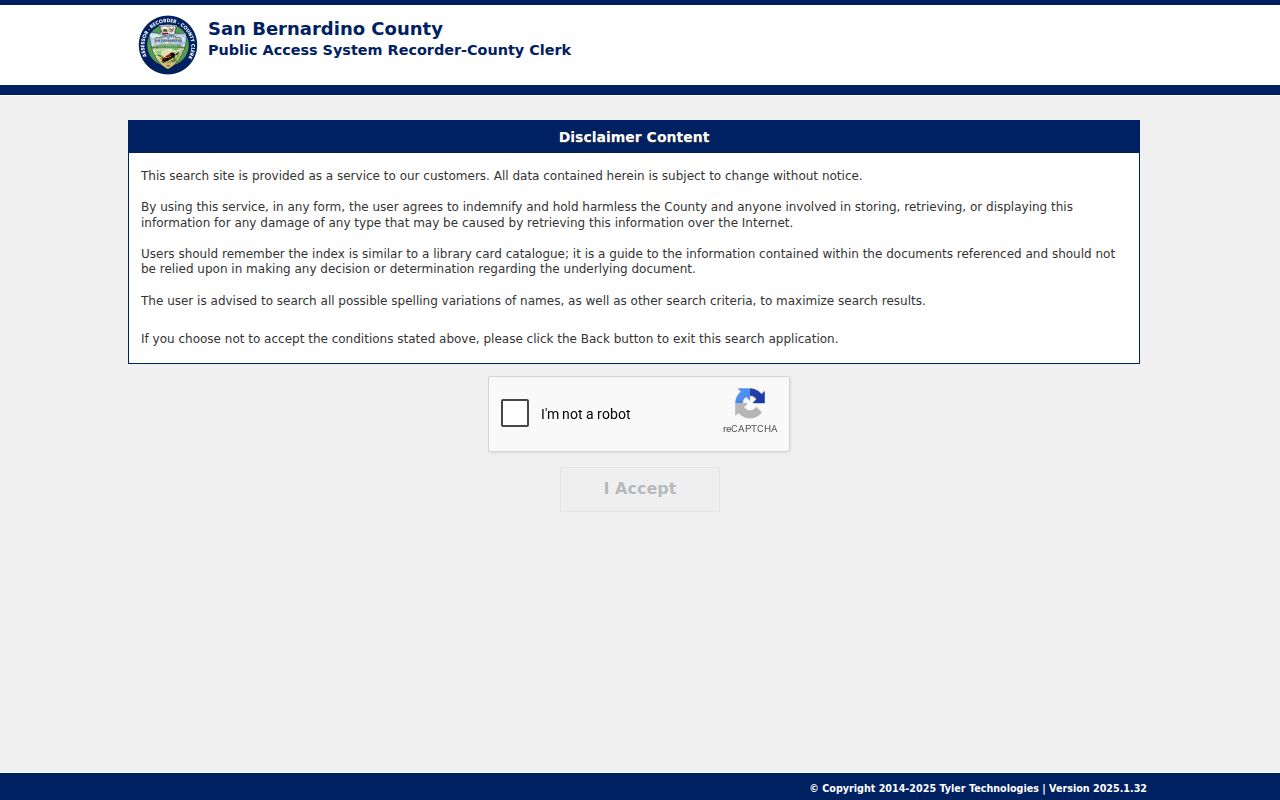
The image shows the index entry point for a Rialto deed search, not a freely viewable deed image. ARC directs researchers to inspect images at the Hall of Records or High Desert Government Center. Copies can be ordered online, by mail, or in person. Noncertified online copies are emailed, certified copies are shipped, and the published schedule lists $4 for the first page and $1.50 for each later page, with online card charges noted separately.
Rialto Previous Residents Index Limits
Two official county descriptions must be kept side by side for Rialto research. ARC's general official-records page says the recorder index covers 1925 to the present. The county's house-history guide at property research describes grantor and grantee searching from 1958 forward and decade microfilm for pre-1958 work at the main Recorder office. The safest reading is not to collapse the statements: 1925 is the general web-index start, while 1958 is the documented online and microfilm workflow divide for a Rialto deed chain.
For a Rialto chain older than the convenient online search, plan a counter or archive fallback. Ask for the legal description, deed books, maps, and the correct decade index. The recorder index is a catalog of document number, date, title, grantor, and grantee. It is not the document image itself, and electronic recording since 2004 did not make Rialto recorded images freely viewable online.
Note: A 1925 start date and a 1958 microfilm instruction answer different Rialto access questions; preserve both dates in a research log.
Rialto Previous Residents: Owners and Occupants
Ownership and residence are separate tracks in Rialto. A deed identifies parties to a transfer. An assessor record supplies assessment and mailing clues. A directory or census can place an occupant at a Rialto house for a period, including a renter or household member who never appears in the title chain. An absentee owner, trust, manager, or family member can also make the mailing address different from the Rialto situs.
- Owner of record
- A person, trust, or entity named in a Rialto recorded instrument or displayed by an assessment system, subject to the source's own limits and dates.
- Occupant
- A person or household listed at a Rialto address by a directory, census, permit context, obituary, or other dated source; occupancy is not title.
- Situs address
- The physical location of the parcel in Rialto.
- Mailing address
- The address used for assessment correspondence, which may be elsewhere and may belong to an owner, trust, or representative.
Rialto assessment data can suggest continuity, but ARC warns that its property system is for assessment information, not legal-title or permitted-use conclusions. A permit applicant or tax account party is also a Rialto address association at a date, not automatic proof that the person lived there.
Pair Rialto Past Residents With Census
Census schedules supply the household layer that Rialto deeds lack. Federal population schedules for San Bernardino County are open through 1950 under the 72-year rule. The 1890 population schedules were largely destroyed nationally, so a Rialto address history that reaches that decade must use directories, assessment books, deeds, maps, newspapers, or other surviving records instead. A census entry is still a snapshot, shaped by the enumerator's geography and the household's answers on that date.
The exact Rialto city-directory run is not verified in a public local catalog. The confirmed NARA issues for 1930 and 1933-1934 and the FamilySearch 1949 volume can serve as named collection leads, while the surrounding Rialto years require a library or archive check. The Rialto city directory collections page separates those verified references from unconfirmed shelf years.
- Copy a Rialto directory name and address exactly, including initials, spouse notes, symbols, street spelling, publisher, and page citation.
- Compare the nearest available census year, then check Rialto household members, ages, relationships, birthplace, and enumeration district.
- Use adjacent directory or reverse-list entries to test a Rialto move, replacement household, renumbered street, or unlisted year.
- After 1925, connect the Rialto address to APN and legal-description evidence, then keep the deed owners separate from the census occupants.
- Use Rialto probate, obituary, cemetery, and vital-record leads to test a death, heir relationship, or later move.
That sequence produces a dated set of observations about Rialto rather than a single claim. Record what the census says, what the directory says, and what remains unknown.
Rialto Previous Residents and Local Maps
Maps can solve a Rialto location problem that names cannot. The Library of Congress Sanborn collection is an appropriate browse point for fire-insurance maps, but the exact Rialto sheets and years were not verified in the official catalog checked. If a local sheet is found, compare its footprint, material, street number, and street name with the Rialto directory and legal description. Do not describe an unconfirmed sheet as a Rialto year.
Permit files add another dated Rialto layer. Countywide permit requirements date only to about 1936, and City of Rialto permits may be earlier. The Rialto City Clerk public-records channel directs a requester toward an existing record, and the form uses permits for a street address as its own example. Give the street number, street name, APN if known, record type, and date span. Ask for an existing Rialto permit card, application, inspection date, contractor or applicant, project description, valuation, final status, or code notice, rather than asking the city to create a resident list.
The county's house-history guide is the source-linked starting point for the older Rialto legal-description workflow.
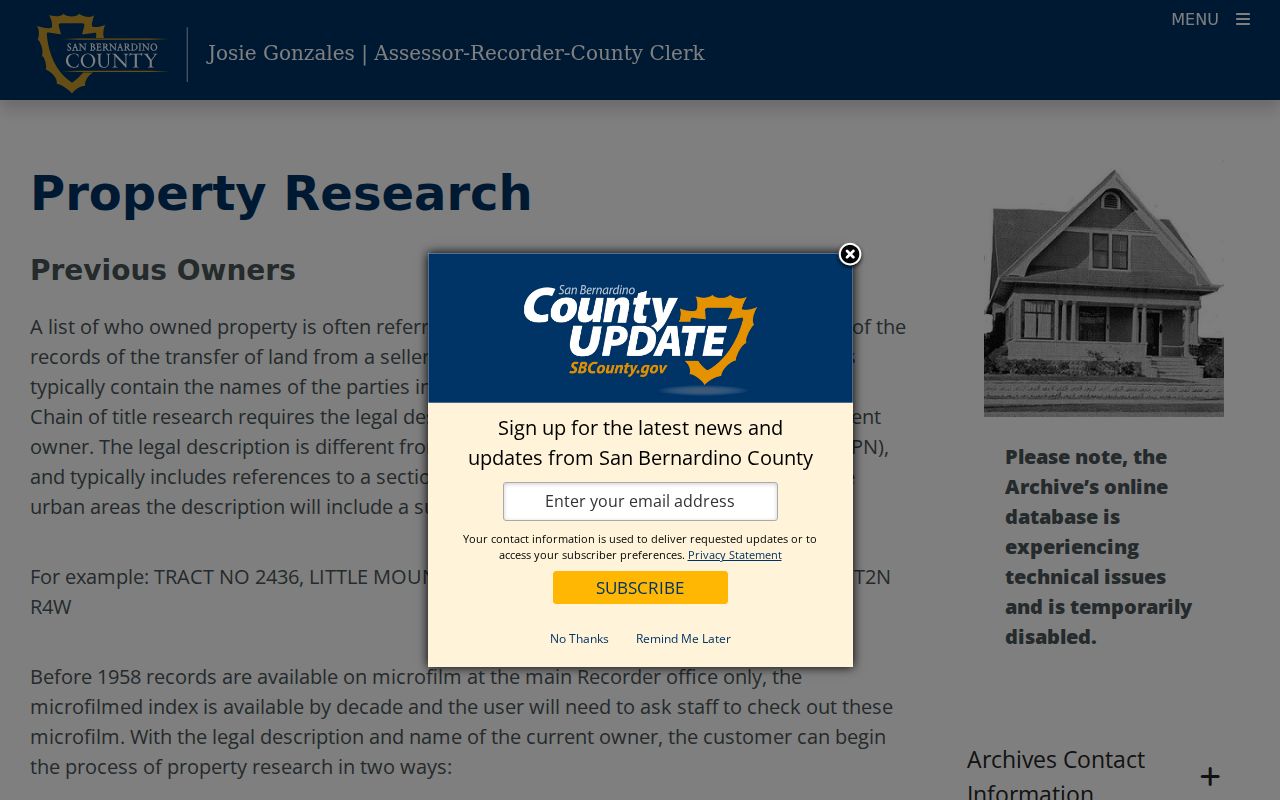
Rialto property research can explain how to carry a legal description backward, while a permit or map can show when the parcel or structure changed. Neither source alone identifies every Rialto past household.
Rialto Past Residents in Archives
The San Bernardino County Historical Archives currently says its building is closed. ARC lists ARC-DLRECArchive@arc.sbcounty.gov and 909-387-1001 for contact. A closure changes the access route, not the value of the Rialto collection. Ask whether staff can confirm a catalog entry, explain a transfer to another custodian, or identify the counter or request path for a particular Rialto parcel and date.
Assessor lot and parcel books from 1895 to about 1950 can show a Rialto taxpayer or owner, legal description, and separate land, improvement, tree-vine, and water valuations. The first appearance of an “improvement” can help date development, but it cannot tell whether a Rialto structure was a house, barn, or shed. Pair the book with a map, directory, census, or permit before assigning a household to the property.
The archive contact and collection page are the source-linked fallback for the older Rialto parcel layer.
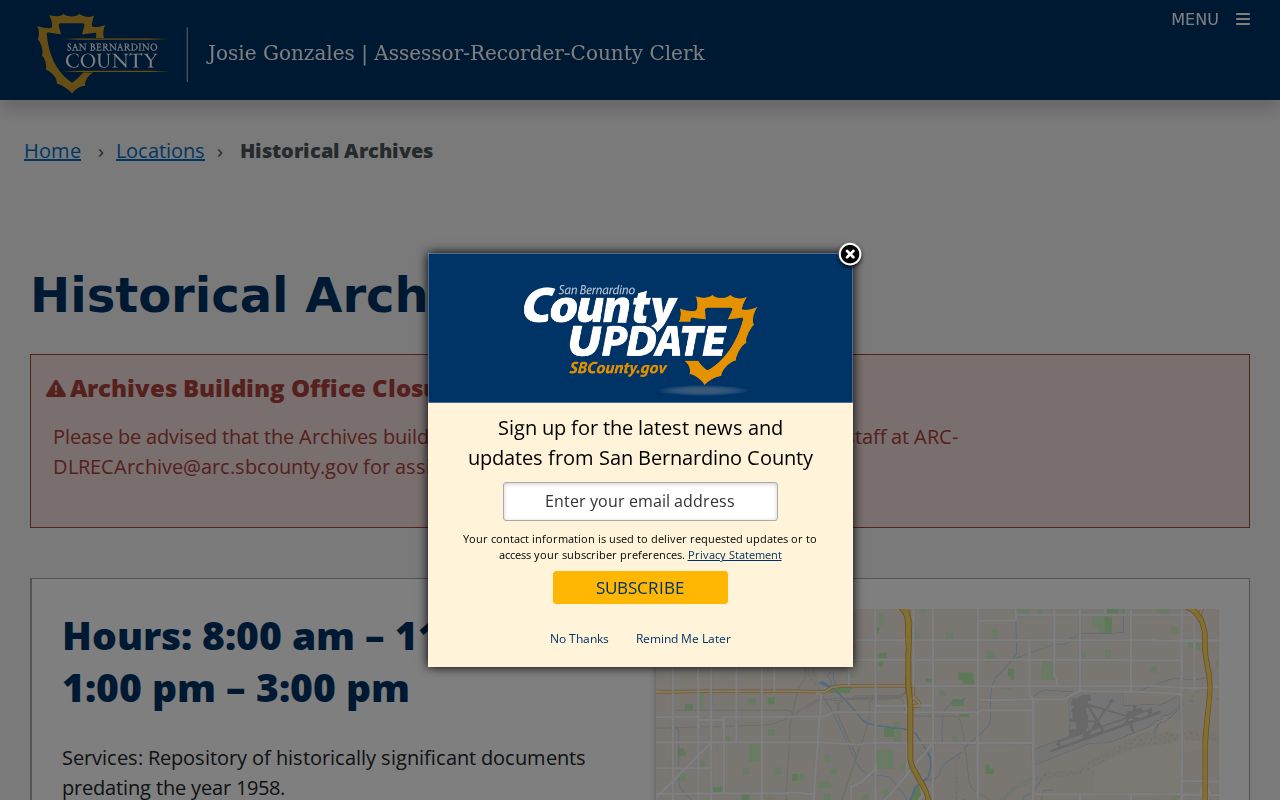
The Rialto archive closure notice is itself important access information. It prevents a researcher from promising an open shelf or inventing a delivery time.
Rialto Previous Residents in Probate
Probate and obituary records can close a Rialto household trail when a prior owner or occupant dies, leaves an estate, or names an heir. The Rialto Record is documented as a newspaper of general circulation from a 1927 court-order date, but its archive run was not verified. A Rialto notice may point to an estate representative, name change, fictitious business, or trustee sale. Treat the notice as a lead, then obtain the underlying court, recorder, cemetery, or county file.
- Probate filings can identify a decedent, representative, heirs, and property references.
- Obituaries can connect a name to a family, move, congregation, cemetery, or former address.
- Rialto Park Cemetery has served the community since 1902; city sources mention plot maps and burial records, but no online name locator was verified.
- County ARC and California Department of Public Health handle different birth, death, and marriage copy routes.
California does not use one simple “closed for a number of years” rule for modern vital certificates. Health and Safety Code sections 103525-103526 limit authorized certified copies to listed eligible people, while many other requesters may obtain informational copies marked unusable to establish identity. Confidential marriage records remain restricted under Family Code section 509. Historical indexes are finding aids, not certified certificates. Use the California Department of Public Health vital-records guidance, the 2026 CDPH fee schedule, and the CDPH vital-records FAQs with the county custodian for the applicable Rialto record and copy type. The CDPH application-form directory identifies the form for each record category.
The San Bernardino County ARC vital-records page is the county-side source for births and deaths occurring in the county and marriage licenses purchased there.
County and state copies cover different events and jurisdictions, so a Rialto family lead should be matched to the correct custodian before a certificate request is sent.
When a Rialto probate or obituary supplies a name, compare it with the deed legal description and the dated household sources. A family connection is strongest when the official record, not the notice alone, supports it.
Trace a Rialto Past Resident Household
A defensible Rialto address history keeps four questions apart: who owned the parcel, who occupied it, what the building looked like, and which source proves each point. The sequence is address to APN, APN to legal description, legal description to deed parties, deed parties to earlier transfers, then directories and census for occupants. Permits and maps explain physical change. Probate, obituaries, and vital records can explain a Rialto departure or family connection.
Address to household: record the current Rialto parcel and as-of date, preserve the legal description, walk the recorder chain backward, compare owners with directories and census snapshots, then mark every conclusion as owner, occupant, clue, or unresolved gap. For current address-keyed work along a full Rialto street, the Rialto street directory handles the present parcel angle; the backward trail should remain tied to its own dates and sources.
Lawful use. Previous-resident research in Rialto is appropriate for house history, family history, genealogy, and personal record work. Public availability is not permission to stalk, harass, threaten, or track a living person.
Good Rialto notes make uncertainty visible. If a directory run, Sanborn sheet, archive item, or permit span cannot be verified, say so and give the next custodian or access channel. That is more useful than turning a partial Rialto record into a complete-sounding story.