
Find Rialto Neighbors by Block
A block-level Rialto neighbors lookup works best when each source is assigned one purpose. The Public Assessor Map locates parcels. The assessor detail can show public owner or mailing fields when disclosure is allowed. The recorder index supplies transaction parties, while city files date work at an address. Historical directories and census schedules may show occupants at a past date. The voter channel is different: it authenticates a person or requires an approved request, so it is not a public list of nearby voters.
| Source | What It Shows About a Block | Access |
|---|---|---|
| Public Assessor Map / Parcel Access | Parcel polygons, APNs, situs locations, and map context around an address | Free online map; select each polygon and record the as-of date |
| ARC assessor property detail | Public owner or mailing fields, values, characteristics, and parcel history | Free govPIMS; protected names or addresses may be omitted |
| ARC recorder index | Grantor, grantee, document type, date, and number for parcel-related instruments | Free online index from 1925; no street search or unrestricted image online |
| Rialto permits and code files | Project, applicant or contractor, inspections, notices, and status around a parcel | Focused City Clerk CPRA request by address or APN; portal for account-linked work |
| Voter information | Registration and district information for an authenticated voter, not a block roster | My Elections Gateway or approved county or state request |
| Reverse directories and census | Past occupants and household snapshots when the address and year are covered | Library, archive, or federal research channel; local runs are not fully verified |
| Community organizations | Voluntary contacts, historical context, or a published event connection | Ask the organization; no official Rialto association roster was found |
The table's owner fields are not occupancy fields. An owner may mail tax notices elsewhere, hold land through a trust or entity, or own a parcel without living there. An occupant may be a renter, relative, guest, or household member who never appears in an assessor or deed record. That distinction is the central safeguard for Rialto neighbors research.
Click Adjacent Rialto Neighbor Parcels
The county map method begins with the target situs, then moves polygon by polygon. Do not define a neighbor only by the next street number. A corner parcel may face two streets, a rear parcel may have a different access point, and a cul-de-sac can make a numerical sequence misleading. The map gives the spatial boundary; the parcel record supplies the identifier for each later check.
- Enter the address in the San Bernardino County govPIMS parcel and map search, confirm the selected situs, and save its APN and map position.
- Zoom until the surrounding parcel polygons are clear. Select each adjacent polygon instead of guessing from street-number order, and note corner, rear, attached, or irregular shapes.
- Open the public assessment detail for each APN. Record only the fields displayed, including situs, any lawful owner or mailing field, parcel context, and the roll or as-of date.
- For an ownership history, carry each owner and legal description into the ARC grantor-grantee index. For past occupants, use a dated directory or census source. Use voter data only through the approved authenticated or file-request route.
The resulting process is simple: address to parcel, parcel to APN, APN to public assessment detail, adjacent APNs to their own records, then deed or historical sources when a time line is needed. A GIS screen is a spatial aid, not a neighborhood directory. For ARC questions, the assessor phone is 909-387-8307 and the recorder-clerk line is 909-387-8306. A whole-street record chain belongs in the Rialto street directory workflow, which handles address-to-deed research at a broader scale.
Rialto Neighbors: Situs and Mailing Fields
Every Rialto block has more than one address identity. Situs means where the parcel lies. Mailing means where an assessment notice is sent. A legal description identifies the land through a tract and lot, block, or another recorded description. ZIP searches describe mail delivery, but they do not decide which city or county department has jurisdiction.
The assessor's Property Info view separates Main Situs from Mailing Address. Owner History can expose relation, interest or type, acquisition and document dates, and inactive dates or numbers where the portal publishes them. Those fields support a careful parcel timeline. They do not make an owner a resident, and the county's assessment system does not determine legal title or permitted use.
Government Code section 7928.205 can protect specified names and addresses in assessor data. A blank or redacted field is therefore not evidence that a neighboring parcel is empty. Keep the APN and source date in notes, and avoid repeating a mailing address when the research question only needs parcel adjacency.
Map Rialto Neighbors With Tract Records
Tract and parcel maps help set a defensible block boundary. They connect the APN to lots, blocks, easements, and subdivision geometry. The Public Assessor Map is the online starting point. Recorder map copies and legal land descriptions require the appropriate ARC counter or official copy channel. The recorder index can be searched online after its disclaimer, but document images require the Hall of Records or High Desert Government Center. Copies can be ordered online, by mail, or in person. The target parcel and its true polygon should be fixed before neighboring records are compared.
Postal geography adds a Rialto complication. Official county materials list 92376 and 92377 for Rialto, while nearby 92316 is associated with Bloomington. A mailing line that says Rialto can fall outside incorporated limits, and a parcel inside the city can use another accepted postal city name. Verify the exact address through USPS, then confirm city limits, APN, and special districts in county GIS.
Annexation history can change which public office holds a later permit or code file. Rialto's Lytle Creek Neighborhoods 2 and 3 became city territory on July 25, 2016. City materials describe growth from 22.3 to 24.1 square miles and identify the approximately 212-acre El Rancho Verde county island as remaining outside city jurisdiction. No verified source supplied a complete street-renumbering or ZIP-boundary chronology, so an older block should be checked against plats and maps rather than assumed to match a current label.
Note: A ZIP code can narrow delivery geography, but only the parcel map and jurisdiction records can place a Rialto address inside or outside city limits.
Read Permit Change Around Rialto Neighbor Blocks
Permits and code files show what changed around a block, not who occupied each parcel. Ask the City Clerk for an existing record by street number, street name, APN, record type, and date range. The City's own CPRA form uses an address-based permit request as an example. Potential records include permit cards, applications, inspection dates, applicant or contractor names, project descriptions, valuation, final status, and code notices, subject to exemptions and redactions.
The current Rialto public-records page links a Hyland Records Search and a separate online request portal. The City Clerk is at 290 W. Rialto Avenue, 909-820-2519, Monday through Friday from 7 a.m. to 6 p.m. A request can be delivered or mailed to the office, sent by email to cityclerk@rialtoca.gov, or made through the documented online channel. The form includes a fax field, but it does not promise fax acceptance. Current pricing is $0.30 per paper page and no charge for email copies. The CPRA determination window is normally 10 calendar days, with production timing depending on the records and exemptions.
The Online Permitting Center covers Building and Safety, Planning, Business License, Fire Prevention, and Engineering. Account linking asks for a first name, last name, permit number or numbers, and account email. Status labels include Closed, Corrections Required, Denied, Expired, Finaled, Fees Due, In Review, Issued, Permit Processing, Routed for Review, and Stop Work Order. Building questions use rialtobuilding@rialtoca.gov or 909-820-2505 option 1. The research did not verify an unauthenticated result set, so the City Clerk request remains the documented fallback for block research.
Rialto Neighbor Voter Access Stops at Authentication
My Elections Gateway is a personal self-lookup. After authentication it can return registration status and locations, districts, a voter information guide or sample ballot, polling place, mail-ballot drop-off information, provisional status, election information, elected officials, and campaign-finance links. The county page says voting history is currently unavailable online and directs voters to 909-387-8300. That design prevents a casual request for every voter on a block.
The Registrar of Voters is at 777 E. Rialto Avenue, San Bernardino, CA 92415-0770, with Communications@rov.sbcounty.gov and 909-387-8300. The address is in San Bernardino despite its Rialto street name. A county voter-file application is an in-person or mail channel requiring a wet signature, government ID, intended-use narrative, and security plan. Purpose boxes include election, political, scholarly, journalistic, governmental, and record review. A specific-voter request permits up to ten records.
Published county charges are $38 through 80,000 records, $86 for 80,001 to 250,000, and $93 above 250,001, with approval-to-delivery stated as three to five business days. The Secretary of State describes a separate approved-purpose request, including $30 for a specific record and a $100 cap. California Elections Code sections 2188 and 2194 restrict access and prohibit commercial use. The state's voter privacy information explains the confidential-voter boundary. Protected addresses, signatures, identification numbers, and confidential voters stay withheld.
For a neighbors lookup, the lawful outcome is an authenticated person's own information or an approved request handled under its stated purpose. Turning that material into a public block list would defeat the access rules and expose people who are not asking to be listed.
Rialto Neighbor Contacts Are Not Resident Rolls
No official City of Rialto neighborhood-association directory or public member roster was found in the research. HOA membership lists are private organizational records unless an organization voluntarily publishes a directory. City staff pages, a museum contact, or a community group's public officer list can route a respectful question, but none establishes every resident of a block.
Several local channels can add history or a voluntary community connection without pretending to be a neighbor database.
| Community channel | What it may contribute | Documented contact or access |
|---|---|---|
| Rialto Historical Society | Historical documents, artifacts, genealogical-information library, and maps tracing growth from 1892 to 1929 | Museum at 205 N. Riverside Avenue; Saturday 10 a.m. to 2 p.m.; official information page |
| Rialto Park Cemetery | Plot maps and burial-record leads; no online name locator was found | 200 N. Willow Avenue; service appointments at 909-421-4949 or recreation@rialtoca.gov |
| Public library inquiry | Possible city or reverse directories, Rialto Record microfilm, yearbooks, obituary files, and in-library genealogy databases | Ask the library directly; no official catalog page confirmed exact shelf years |
| Rialto Record notices | Estate, name-change, fictitious-name, trustee-sale, and other leads that point to deeper records | Newspaper or archive inquiry; court order for general circulation dated June 27, 1927 |
Use a community contact to ask about a published event, a historical collection, or a voluntary way to reach an organization. Do not ask a librarian, cemetery worker, or civic contact to disclose a private member list. The same boundary applies to school, church, chamber, veterans, and fraternal records, which may exist without being public or comprehensive. For a federal census snapshot, NARA Riverside offers research-room, catalog, and order channels; the local library or archive should be asked about the exact address source first.
Official Rialto Records Versus Generic Tools
Generic commercial neighbor tools can be tempting when an official map shows only an APN or a protected owner field. They are best treated as unverified leads, not as a second public records office. They may combine old data, proprietary material, user submissions, and same-name matches. Official records can also be incomplete, but their custodian, scope, date, and correction route are visible.
| Question | Official Rialto or county source | Generic commercial neighbor tool |
|---|---|---|
| What is the authority? | Named custodian such as ARC, the City Clerk, Registrar, or an archive | Provider compiles records and may not show the original source |
| What is the address link? | APN, situs, legal description, permit number, or dated document | May merge people, addresses, and time periods without a clear parcel key |
| How current is it? | Portal or document supplies a roll, recording, filing, or as-of date | Update timing and stale entries can be unclear |
| How is an error fixed? | Contact the custodian that created the record and keep the correction trail | Provider opt-out or correction process varies and does not change the source record |
| What should it prove? | A limited fact within the source's stated scope | A lead that needs independent verification before it is repeated |
For Rialto neighbors, the official parcel and map record is the anchor. A commercial result cannot turn an owner field into proof of occupancy, and no tool can lawfully fill the gaps created by protected voters, private utility accounts, or absent local association rosters.
Protect Rialto Neighbors From Data Exposure
California's privacy layer matters even when the research begins with a public parcel. The California Consumer Privacy Act, as amended by the California Privacy Rights Act, gives consumers covered-business rights to know, delete, correct, limit use or disclosure of sensitive information, and opt out of sale or sharing, subject to exceptions. The Attorney General's guidance explains the available requests and limits.
The California DROP deletion platform lets a resident verify through California Identity Gateway or Login.gov and submit one free standing request to more than 600 registered data brokers. The California Attorney General's data-broker registry guidance explains the registry and deletion framework. Optional matching identifiers include names, former names, date of birth, ZIP, email, phone, mobile advertising IDs, connected-TV IDs, and VIN. Brokers retrieve requests at least every 45 days, with statuses such as deleted, exempted, opted out of sale, not found, and pending.
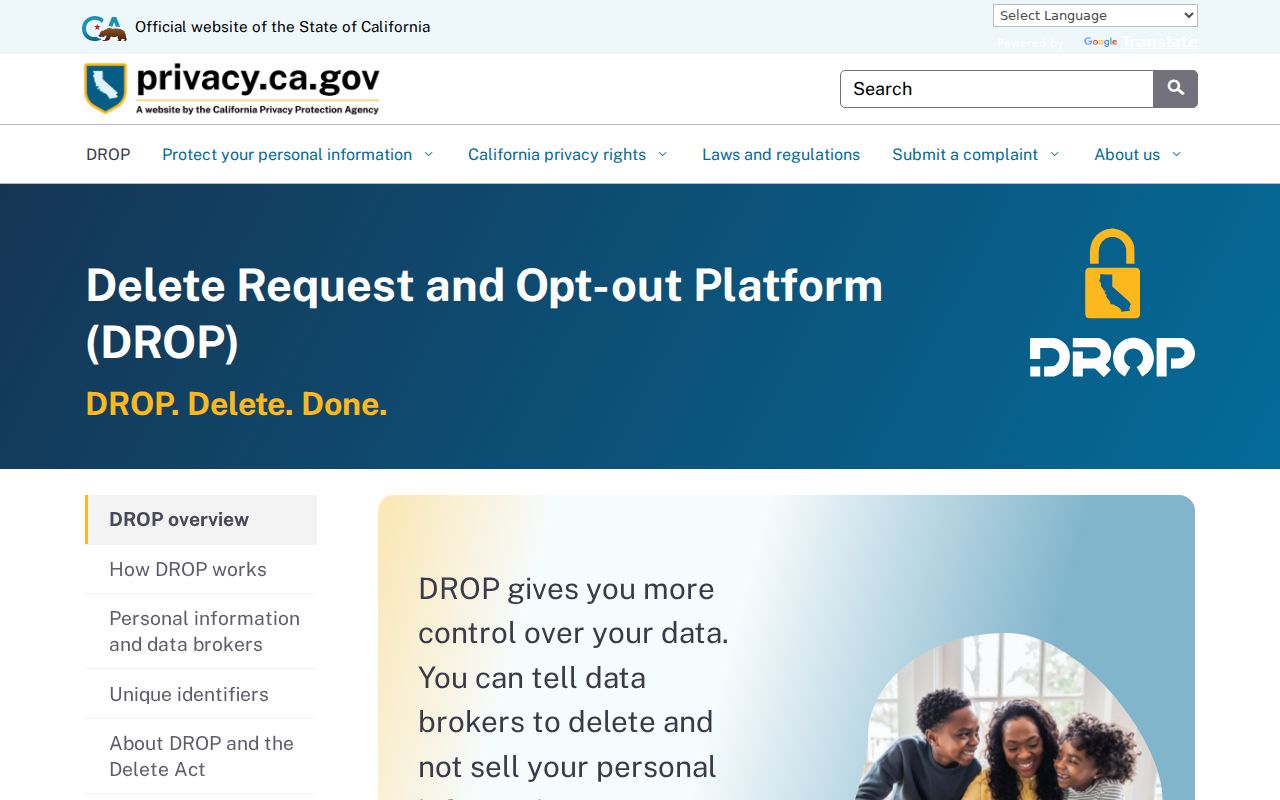
The DROP screen illustrates a consumer route for broker-held data, not a way to erase the county assessor, recorder, court, or other government source records.
The California Attorney General CCPA guidance explains the rights and exceptions that apply to covered businesses and consumer requests.
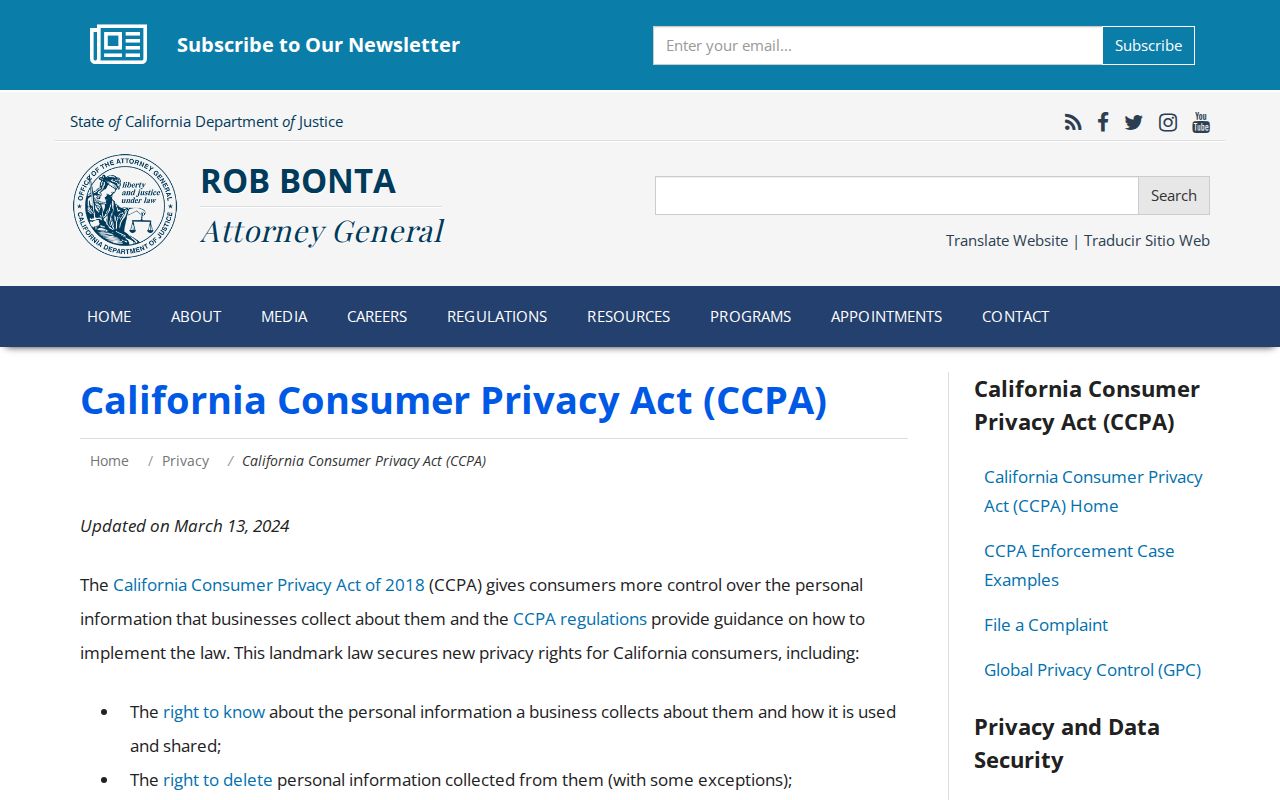
Privacy rights and public-record access operate on different tracks. California's Safe at Home program gives eligible participants a substitute mailing address and confidential voter registration, while Government Code section 7928.205 can protect specified home-address data in assessor records. A neighbor lookup must leave protected households out of any public summary.
Where a Rialto Neighbor Lookup Ends
A parcel map can identify the land next door. An assessment record can provide limited public fields. A deed can identify transaction parties. A permit can show a dated project. None of these sources names every renter, household member, guest, utility customer, or delivery recipient. DMV addresses are protected, and private association lists are not transformed into public records by a search request.
For personal research, family history, reconnecting with a known contact, or a respectful civic question, keep the source, date, APN, and purpose clear. Ask the custodian for correction when a record is wrong. Do not copy voter data beyond its approved use, publish a block roster, or use a missing field to guess a protected person's location.
California Penal Code section 646.9 addresses stalking. Sections 422 and 653.2 can apply to criminal threats or repeated electronic harassment, and Code of Civil Procedure section 527.6 concerns civil harassment restraining orders. Public availability is never permission to threaten, impersonate, monitor, or harass a neighbor.
Lawful use. Rialto neighbors research is limited to personal, lawful purposes such as understanding parcel history, finding a public community contact, or reconnecting through an appropriate channel. Do not use records to watch, intimidate, stalk, harass, or harm anyone.